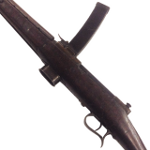
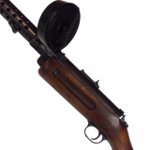
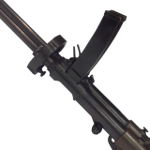
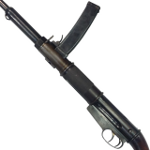
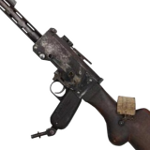
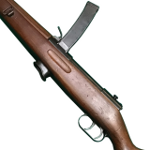
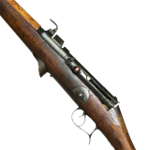
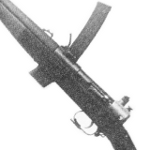
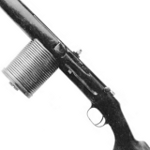
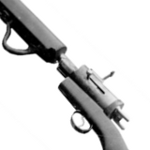
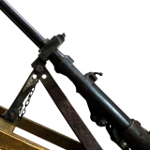
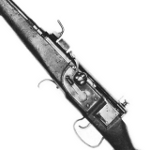
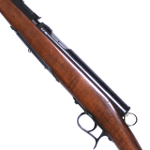
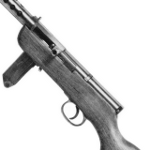
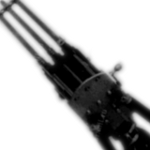
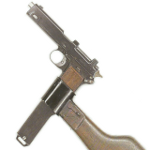
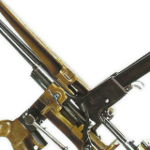
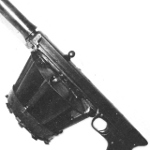
The principles of the Cei-Rigotti submachine gun - which had actually already been conceived by Bethel-Abiel Revelli as early as September 1915 - ushered in an entirely new class of weapon in Italy, which was known henceforth as the moschetto automatico ('automatic musket'; as in carbine). The first branch of the Army to express an interest in this idea was not, in fact, the infantry, but rather the Aviation Corps who considered the moschetto to be an ideal personal defence armament for aircrew. There was initially some resistance to the thought of deploying weapons such as this to infantry troops; in the tests of the Cei-Rigotti moschetto, the Technical Office criticized the weapon as being less effective than the unmodified Villar Perosa because it only had one barrel rather than two. The logistical difficulties associated with re-organizing or replacing the Pistola Mitragliatrice sections, which by now had become integral parts of the Italian infantry battalions, upon the adoption of a weapon like Cei-Rigotti's was also a great concern to the examiners. It was therefore decided to take no action concerning the moschetto automatico at this time, despite Colonel Revelli approving of the idea.
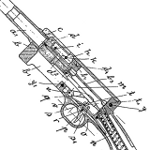
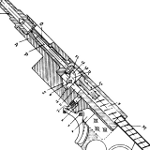
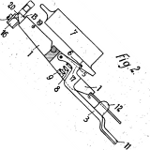
Cei-Rigotti secured a patent protecting his submachine gun design on the 2nd of January 1918, one of the earliest moschetto automatico patents that is known to have been obtained. However in the ensuing months, a wide range of other competing moschetti were patented by other inventors and companies, some of which were built as prototypes and tested by the Technical Office, including the Savoia, Crocetti, and Revelli-Beretta designs. The Supreme Command had by June 1918 embraced the concept quite enthusiastically. The Cei-Rigotti moschetto, it seems, rapidly faded into obscurity as the Revelli-Beretta pattern was chosen for adoption in September. As far as is known, Colonel Cei-Rigotti undertook no further work on submachine guns after the war.
This article is part of a series on Submachine Guns of the First World War