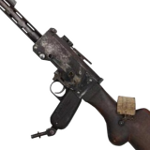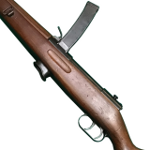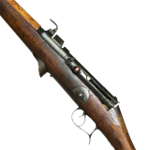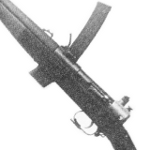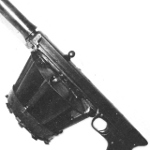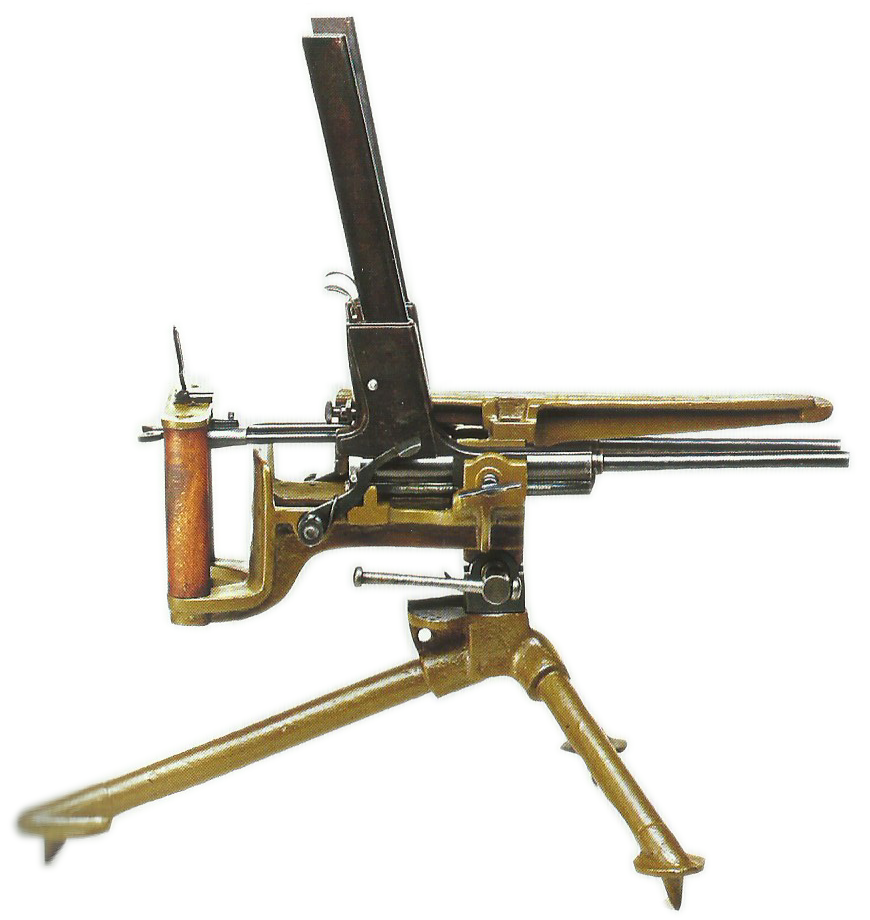
(Photo: Mötz & Schuy)
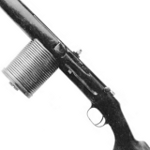
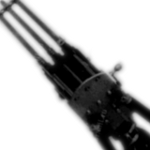
After encountering the Italian twin-barreled Villar Perosa submachine gun during the Battle of Asiago (15th May - 10th June 1916), the Austro-Hungarians developed an interest in fielding an equivalent weapon. In November 1916, the K.u.K Kriegsministerium approved the development of two separate machine pistol projects at Fegyver- és Gépgyár (FÉG) in Budapest and Österreichische Waffenfabriksgesellschaft (ŒWG) in Steyr. At FÉG, work on this concept was headed by factory manager and arms designer Rudolf Frommer, who naturally decided to use his own design - the 7.65×17mm Frommer 'Stop' pistol - as the basis for this project. Frommer designed a continuously-firing version of the Stop pistol, feeding from an extended magazine of 25 rounds, along with a special tripod mount onto which two of these machine pistols would be fitted upside-down and adjacent to one another. The result was a weapon system that effectively mimicked the principles of the Villar Perosa, despite bearing little in common with the Italian weapon mechanically.
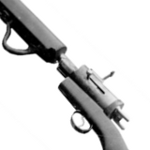
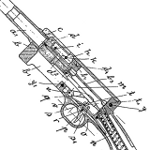
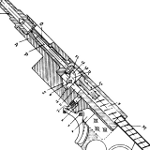
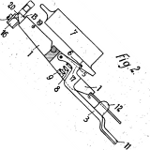
Frommer acquired a patent protecting this system, entitled simply Gépfegyver ('Machine Gun'), on the 27th February 1917. Shortly thereafter physical prototypes were built largely to the patent specification, albeit with some alterations made to the build of the machine pistols themselves. Rather than simply being standard Stop pistols converted to fully-automatic fire, the prototype machine pistols were special variants in which the forward trigger was absent and instead a thumb trigger was mounted to the rear of the pistol grip. When mounted to the tripod apparatus, these thumb triggers were engaged by a pair of pistons that were connected to a second pair of triggers mounted to the spade grips; when the tripod's triggers were pressed, the pistons would hold down the pistol triggers. The cocking pieces were also redesigned as protruding arms, which were retracted by a set of hinged retracting pawls on the tripod - again copied from the Villar Perosa.
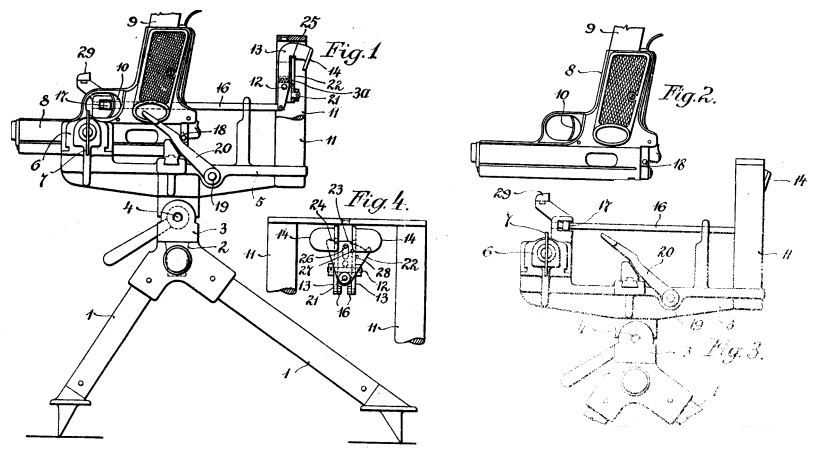
Rudolf Frommer's patent of 27th February 1917, protecting the 'Pistolen-MG' system.
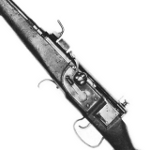
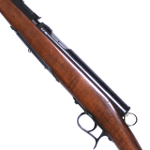
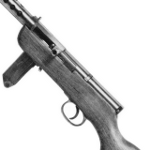
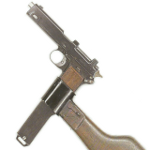
The Frommer machine pistols were made in two distinct variants. The first was intended for individual, handheld use, with a standard-length barrel with a pair of grips on the magazine housing; though curiously it retained the thumb trigger which made it somewhat awkward to operate. The second model was intended strictly for attachment to the tripod apparatus rather than individual use. It had a lengthened barrel and no sights. As far as is known, no version of the Frommer machine pistol was made with a buttstock or conventional trigger group, though some semi-automatic Stop pistols (Anschlagpistolen) fitted with stocks and extended magazines were trialed alongside the machine pistols.
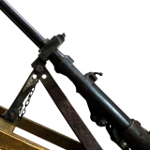
Small numbers of Frommer and Steyr machine pistols were distributed to select Gebirgsjäger battalions for field trials during the early months of 1917. These were issued with special manuals instructing users on the most effective use of these new weapons, as the submachine gun concept was new and unfamiliar to the vast majority of troops, and written feedback in these manuals was requested. The existence of a rusted Frommer machine pistol at the Forte Carpenedo museum in Italy indicates that some of these guns may have been found by Italian troops in the field, or perhaps by battlefield
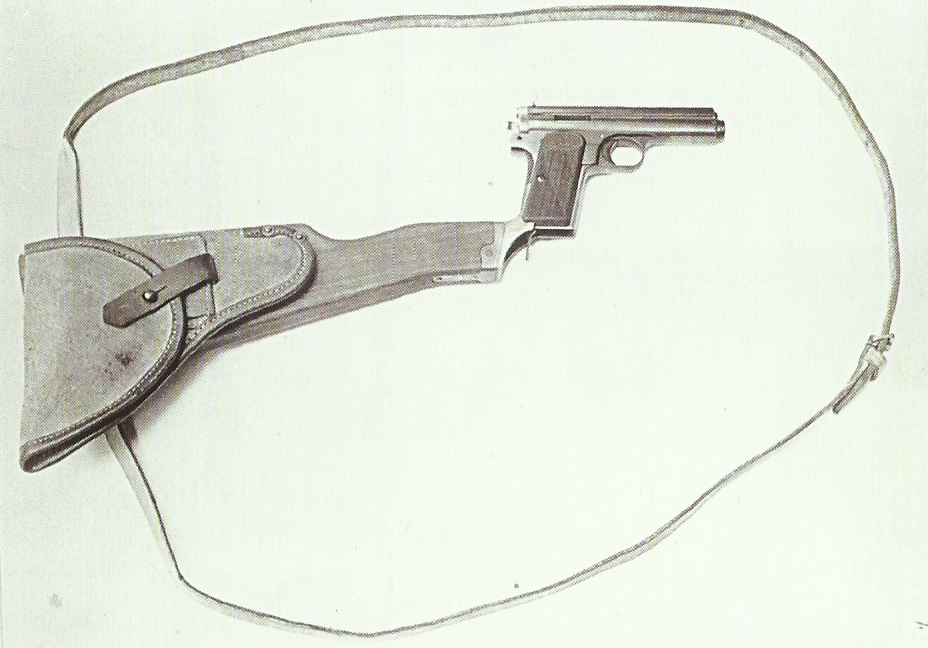
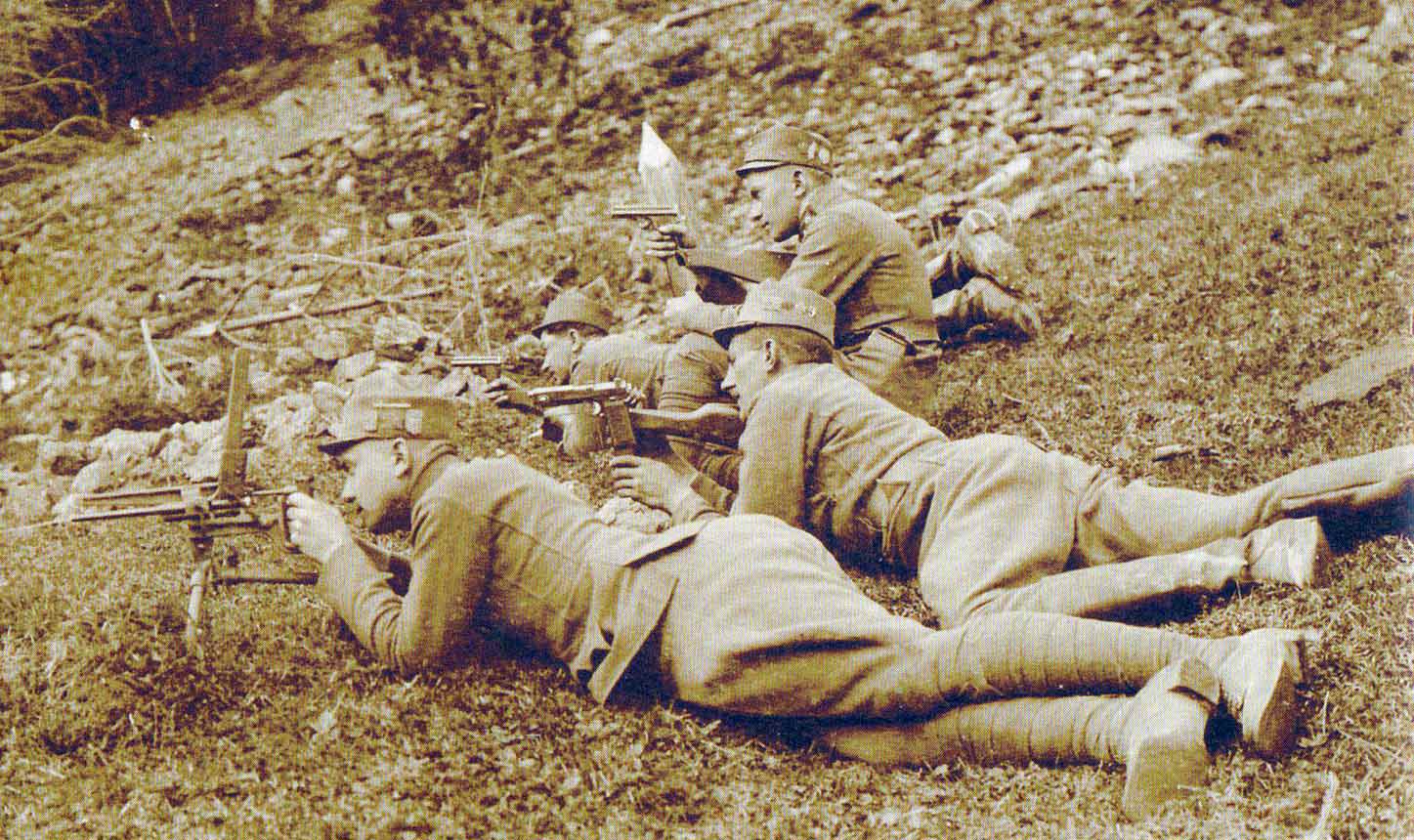
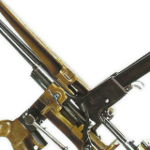
Left: a Stop pistol with special holster-stock, developed as an individual alternative to the double-gun. Right: tests of the Pistolen-MG
(forefront), Steyr-Doppelpistole (right), and two stocked Stop pistols in Bruckneudorf, Spring 1917.
Production of Frommer Pistolen-MG (in both individual and double gun assembly) and stocked Anschlagpistolen was undertaken from the 10th of February to the 21st of April in several batches, totaling 28 double-guns, 56 individual guns, and 120 stocked guns. However none of these systems offered by FÉG managed to inspire confidence from the Kriegsministerium, who cancelled all work on the project in July and instead funneled resources to the development of a rival submachine gun - the Sturmpistole by Škoda-Werke, which was a direct copy of the Villar Perosa chambered in 9x23mm.
Resources used:
- Josef Mötz & Joschi Schuy, Die Weiterentwicklung der Selbstladepistole I (Laxenburg: Mag. Josef Mötz, 2013).
- Thomas Nelson & Daniel Musgrave, The World's Machine Pistols and Submachine Guns, Vol. II (Hong Kong: Chesa Limited, 1980).
This article is part of a series on Submachine Guns of the First World War