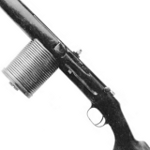
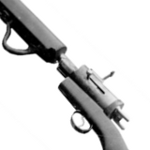
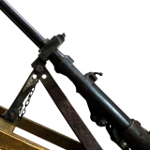
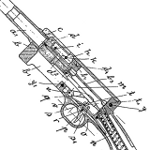
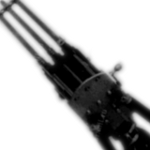
Bergmann
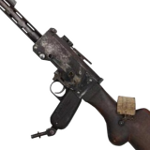
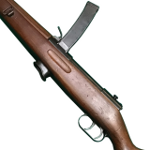
MP 18,I machine pistol
Maschinenpistole
18,I
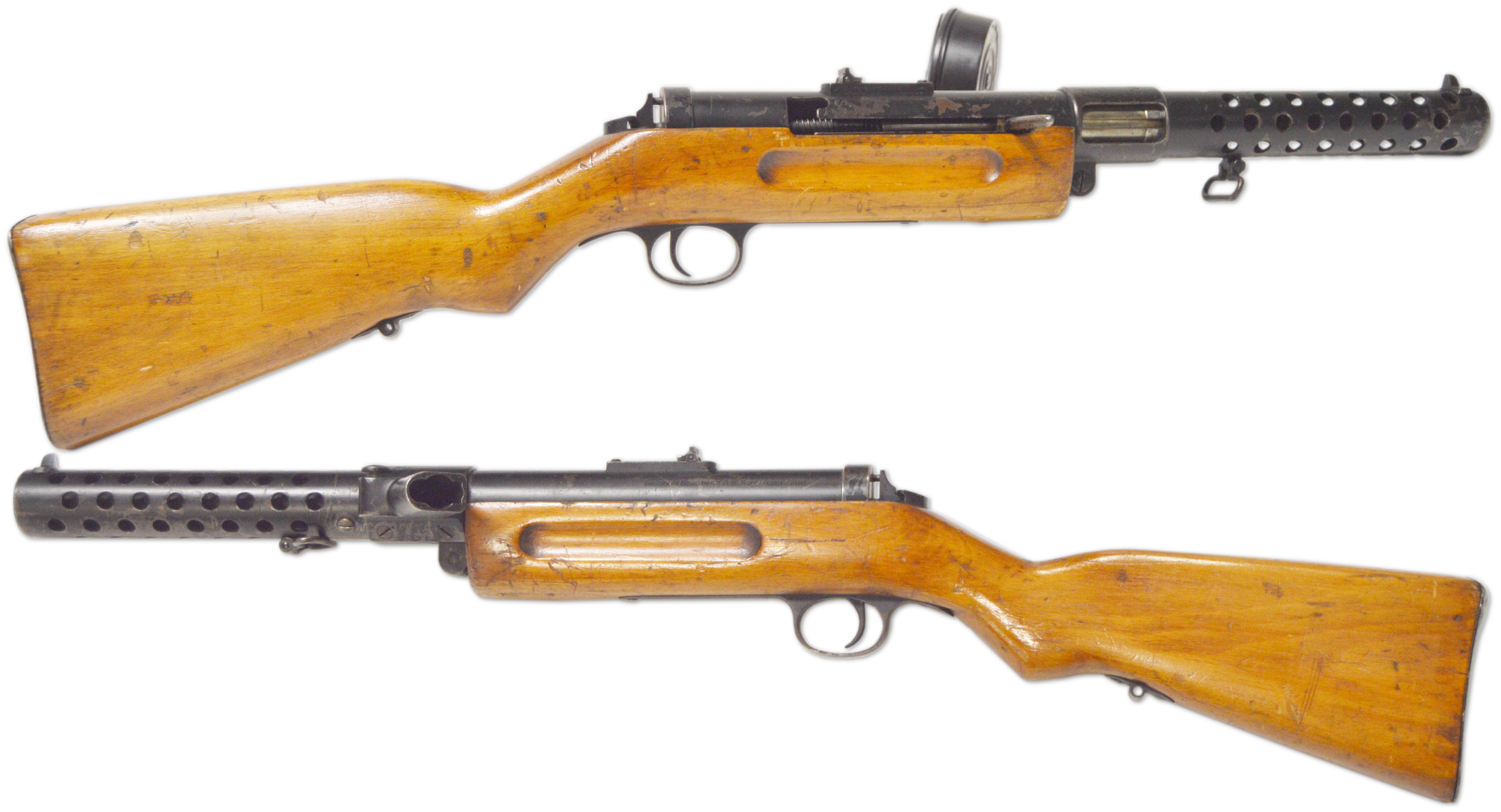
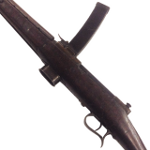
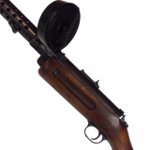
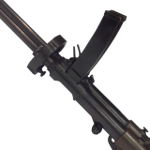
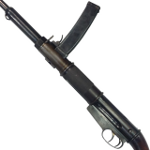
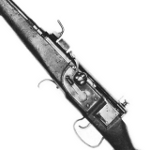
(Author's photo via Royal Armouries Collection)
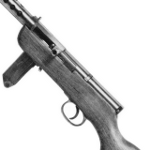
The Bergmann MP 18,I (Maschinenpistole 1918 I) is the machine pistol or submachine gun that is often credited as the very first. This gun was designed by German arms designer Hugo Schmeisser (1884 - 1953) and manufactured at the Theodor Bergmann Waffenbau Abteilung ('Theodor Bergmann Weapons Fabrication Department') in Suhl, Thuringia. It represented a major landmark in the development of the submachine gun as this class of weapon is understood today, and created an accepted standard after which many subsequent submachine gun designs would be modeled. In spite of this, little research of depth has been undertaken into the development and history of the MP 18,I. This page details the creation, adoption, and service use of the MP 18,I during the First World War and the subsequent interwar period.
Precursors of the MP 18,I
The most important precursory
invention in the development of the MP 18,I machine pistol was the lange Pistole 08 ('long
Pistol'), commonly known today as the 'Artillery Luger'. This weapon
was a modification of the standard German service Luger P.08
self-loading pistol, albeit built with a 200 mm (7.8 in) long barrel
which was double the length of the standard P.08 barrel, and issued
with a detachable wooden shoulder stock. The lange Pistole, or
lP.08, was introduced into German military service in June 1913,
though it was not originally conceived with the role of an assault
weapon, instead being issued as a backup arm for artillerymen to
free up rifles and carbines for the infantry. However, by 1916, an
increased demand for pistols among the infantry resulted in the Preußische Kriegsministerium
(Prussian War Ministry) considering the wider distribution of pistol-calibre arms across all services.
Because
its increased barrel length permitted relatively accurate fire
over short-range distances, the lange Pistole was considered most
suitable for this role. Necessary modifications were made to
the lP.08 in order to repurpose this design into a weapon suitable
for infantry assault actions. Tests of the lP.08 coupled
with a 32-round high capacity drum magazine, replacing the P.08's
standard 8-round box magazine, were conducted in 1916, and the Preuß.
KM recognised the potential benefits of
the lP.08 over existing infantry rifles and carbines within the
context of close-quarters trench combat, and the potential use of
the weapon in conjunction with hand grenades due to its light
weight.
The Preuß.
KM approved increased orders for new lP.08 long pistols
and on the 4th November 1916, Generalquartiermeister Erich Ludendorff ordered
the allocation of ten lP.08 pistols to each Infanterie-, Jäger-, and
Sturm-Kompagnie. These were to be distributed at the discretion of
the company commander on a situational basis. Stosstruppen
and Pionere formations
were often given priority for these weapons, as they would be the
most likely to engage in trench-clearing duties.
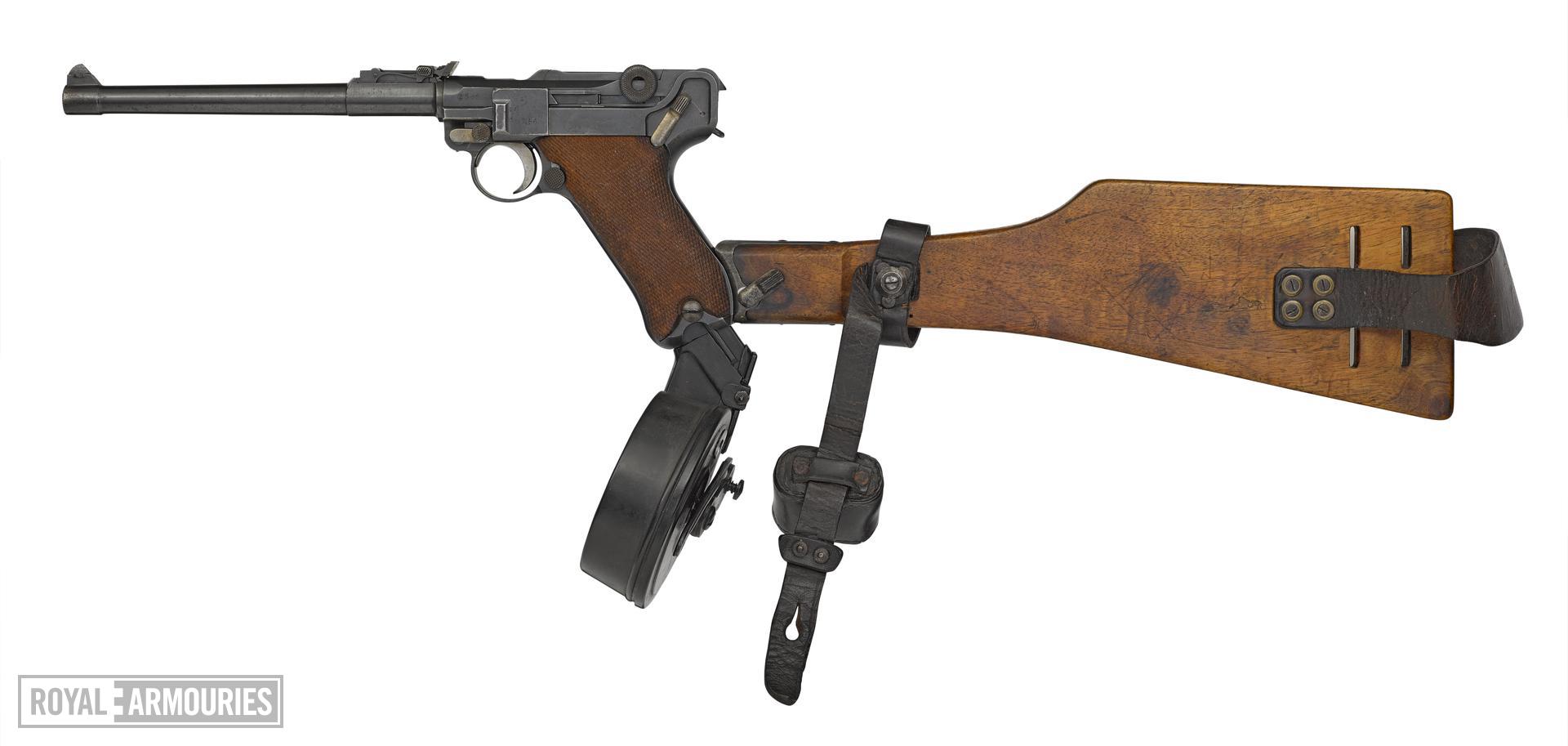
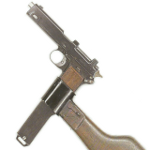
The lange Pistole 08, commonly known as the 'Artillery Luger'; a modification of the Luger P.08 pistol with an extended 7.8 inch barrel and wooden shoulder stock.
Initially intended for the Artillery and Navy, from November 1916 these guns were coupled with 32-round drum magazines and placed into general issue on the
Western Front at a rate of ten guns per infantry company. The German machine pistol concept doctrinally emerged from the use of this gun.
(Royal Armouries Collection)
The adoption of the lP.08 was
not, however, without a caveat. Owing to a severe shortage of
regular pistols in circulation among the officer corps, the
Oberste Heeresleitung (O.H.L.;
'Supreme Army Command') decreed on the 6th March 1917 that all
frontline units were now subject to a strict limit on the number of
pistols permitted per company: twelve in companies serving on the
Western Front, and only six in companies serving on the Eastern
Front. This decree noted that newly-issued lP.08 pistols were to be
counted under this order, so any companies in the West which were
fully equipped with ten lP.08s were only permitted two additional
'short' pistols - whereas companies in the East were expected to
return all their 'short' pistols immediately! Thus even from the
outset of its distribution, it became clear that the lP.08 alone
could not entirely satisfy the high demand for automatic pistols
among frontline infantry troops.
The pertinence of both the P.08 and lP.08 in assault actions was surmised in the memoirs of the Badisches Leib-Grenadier-Regiment Nr. 109 (28. Infanterie-Division):
"In the summer of 1916, each company
was equipped with twelve Pistole 08 pistols (self-loading pistols
with an eight-round magazine, 9mm caliber) instead of six. Unlike
a rifle, the self-loading pistol did not require the shooter to
manually cock and recock the bolt; these movements were performed
automatically by the pressure of the propellant gases during
firing, so that the pistol was reloaded immediately after each
shot. A significant advance came in the autumn of 1917 with the
introduction of the 32-round drum magazine, which increased the
rate of fire from 40 to 110 rounds per minute. Each company
received ten pistols with carrying equipment; similar trailing
magazines were also supplied for the rifle, but were only used by
individual sentries in quieter positions. [...] Pistols, along
with hand grenades, were standard equipment for assault troops
during patrol operations and when digging trenches."
Despite the adoption of the
32-round magazine for the lP.08 in late 1916, many German units did
not receive these until late 1917 or even early 1918.
To the extent that the lP.08 can
be considered a precursor of the machine pistol or submachine gun
concept, the German Army became the first to issue such weapons with
the intent of employing them specifically as assault weapons. The
Italian Army had a similar weapon, the Pistola Mitragliatrice Fiat
mod. 1915 (popularly known as the 'Villar Perosa'), a twin-barrelled
machine gun chambered in the 9x19mm Glisenti pistol cartridge, which
had been in service since September 1915. The Villar Perosa,
however, had been primarily deployed in the role of a light support
weapon fired from a fixed mount (initially a gun shield, later a
bipod) and though its potential application as a dismounted assault
weapon had been recognised by some Italian tacticians as early as
October 1916, this would not be formulated into official doctrine
until June 1917 with the raising of the Reparto
d'Assalto ('Assault Departments').
The serious development of machine pistols proper began around this time, with Germany's ally Austria-Hungary making several concerted efforts to create a copy of the Villar Perosa, resulting in several prototype designs which were put to trial such as the Anschlagpistole M.12, Pistolen-M.G. M.17, and Sturmpistole M.18. The close co-operation and sharing of intelligence between Germany and Austria-Hungary makes it implausible that the Germans were not at least aware of the existence of the Villar Perosa, and since March 1917 the Austro-Hungarian infantry training school in Levico, overseen by German instructors, had made use of a captured Villar Perosa in Sturmtrupp courses. When the German Army committed six divisions to participate in the Caporetto Offensive (24th October - 19th November 1917) on the Italian Front, the Austro-Hungarians had begun to issue their Sturmpistole to select infantry divisions for field testing. The K.u.K. 50. Infanterie-Division, for instance, deployed the Sturmpistole in combat for the first time on the opening day of the offensive, when they captured the village of Gabrije to pave the way for the main assault against the Italian lines by the German 12. Infanterie-Division.
German troops further came up against the Italian machine pistol, the Villar Perosa, during the abortive offensive at the First Battle of Monte Grappa (13th - 26th November 1917). In the aftermath of the German intervention on the Italian Front, an estimated 2,000 Villar Perosa machine pistols had been captured by the Austro-Hungarian and German forces. A great deal of these were pressed into Austro-Hungarian service, though at least some appear to have been taken into German use by the Flieger-Abteilung (A) 219 to be fitted on reconnaissance planes using proprietary improvised mounting systems.
Immediately after the Caporetto
Offensive, the German and Austro-Hungarian war ministries began
collaborating on the development of a machine pistol for service in
both armies (see: Trial and
Adoption). It was in this context that the first record of
the Maschinenpistole MP 18,I appeared in the final month of 1917.

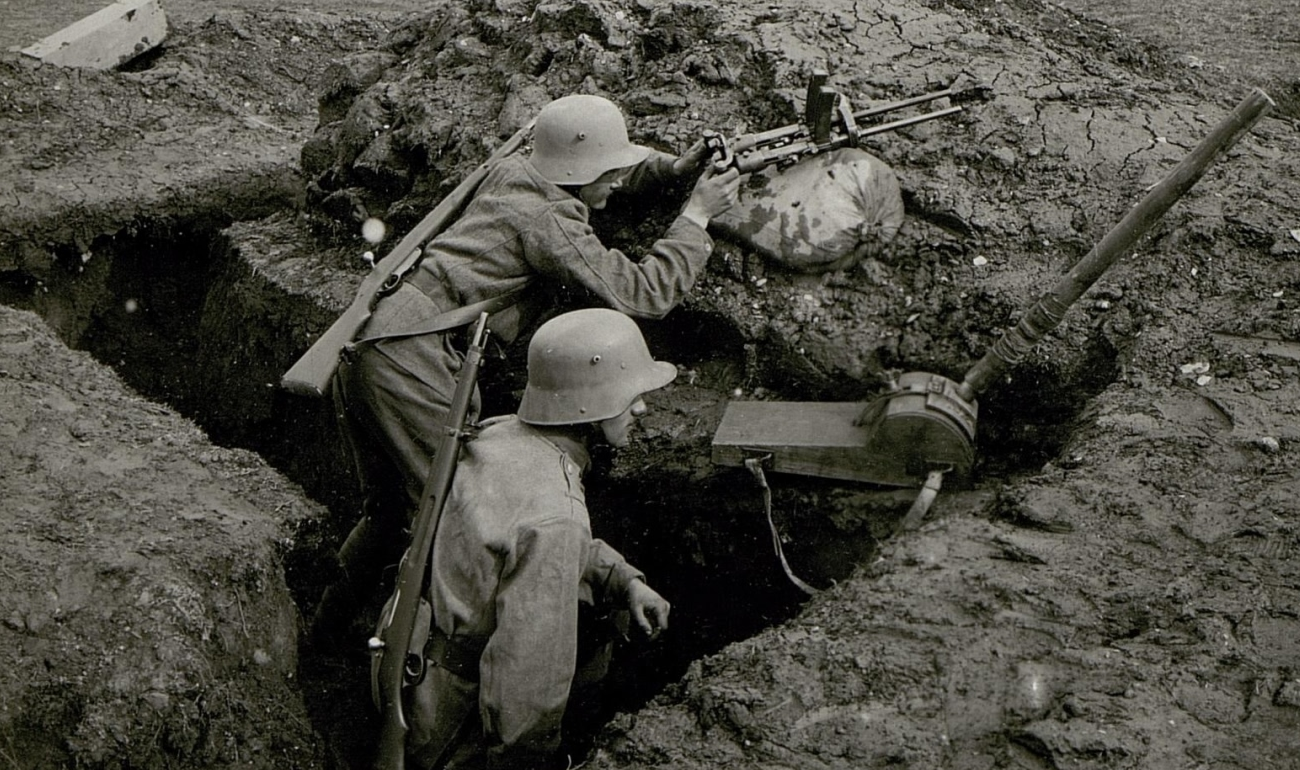
Left: Three infantry-pattern Villar Perosa machine pistols, likely
captured at Caporetto in 1917, fitted to a German Halberstadt CL.II aircraft using
improvised mounts. Right: Austro-Hungarian
Sturmtruppen training with a captured Villar Perosa at Levico in
March 1917. The Central Powers were first exposed to the concept
of
the machine pistol through samples of this weapon
obtained from the Italian Front.
(Image 2: Österreichische Nationalbibliothek)
Design
aspects of the MP 18,I and comparison to contemporary designs
The MP
18,I operates on a open-bolt straight blowback action in which the
bolt is held in the open position when the weapon is cocked for
firing, and comes forward when the trigger is pulled to collect a
cartridge from the magazine, push the cartridge into the breech, and
proceeds to close over the breech until the firing pin strikes the
cartridge primer. The bolt is then blown back by the cartridge
ignition until it travels to the rear of the receiver, upon which it
returns forward toward the breech to repeat the cycle without
interruption. This cycle repeats as long as the trigger is held. The
spent cartridges are ejected via an open ejection port on the right
side of the magazine housing, parallel with the magazine feed. The
weapon utilises a cylindrical bolt housed inside a tubular receiver
with a long cocking slot cut into the right side of the receiver
through which the charging handle protrudes. The receiver is fitted
to a short wooden stock; for quick disassembly, the receiver tips
open on a forward hinge to allow the end cap to be removed, allowing
open access to the bolt and mainspring via the rear end of the
receiver. The receiver locks in place onto the stock via a catch on
the end cap.
The
bolt used in the MP 18,I is a wide diameter design comprising three
parts: the main bolt body; the firing pin; and the extractor. The
bolt body contains the main mass and forms the forward section of
the bolt, and also carries the charging handle. The front part of
the firing pin sits inside the length of the bolt body, while the
wider back end of the firing pin forms the rear section of the bolt
and rides on a long cylindrical guide rod with a thin buffer spring
coiled around it. A small opening is cut into the bolt face through
which the firing pin protrudes, and the extractor sits over the bolt
face opening. Despite the bolt body and firing pin being separate
components, the firing pin does not move independently of the bolt
body and is fixed in place, only moving with the rest of the bolt.
The claw-type extractor hooks against the rim of the cartridge when
the bolt closes fully over the breech, and then carries the spent
cartridge with the bolt until it reaches the ejection port.
The bolt sear of the MP 18,I is far forward of the trigger, and instead of actuating the sear directly, the trigger pushes against a spring-loaded cylindrical rod which extends across the length of the trigger housing and causes the sear to drop, releasing the bolt. The MP 18,I trigger mechanism has no fire selector and cannot be set to fire single shots.
The MP 18,I has no mechanical trigger lock or forward safety to lock the bolt in the closed position. The only safety provision is a bolt hold catch cut into the rear part of the cocking slot. The bolt can be held fully to the rear, in the open position, by latching the bolt handle into this hold catch, preventing it from coming forward. Two downsides are evident to this system: firstly, that keeping the bolt in the open position invites the entry of dirt into the receiver; and secondly, there is a hazard of accidental discharge if the bolt handle is knocked out of the hold catch. Similarly there is a risk of accidental discharge when the bolt is left in the closed position, as knocking the weapon with enough force to cause the bolt to move can also result in accidental discharge. This problem was eventually addressed in later improvements to the MP 18,I in the 1930s (see The 'MP 18,Iv' System Schmeisser).

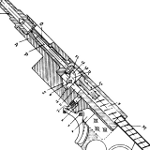
Cross-section diagram of the MP 18,I's operating mechanism. The bolt sits on spring-coiled guide rod and travels on a straight open-bolt blowback
principle in which it is unimpeded by any sort of delaying action. It has no mechanical safety and the bolt can only be locked in the open position.
The
magazine used in the MP 18,I is a 32-round drum magazine known as
the TM.08 Trommelmagazin
(often abbreviated as 'Tr.
magazin'). This is the same type of drum magazine issued
with the aforementioned lP.08 long pistol. The magazine uses a
single-stack load with a single-position feed opening, and due to
its unconventional design it requires the use of a special loading
tool in order to fill to capacity. Because this magazine is
originally designed to feed through the Luger P.08 pistol grip, the
feed neck of the magazine is built at a 45° canted angle and thus
the magazine housing of the MP 18,I is canted at the same angle.
Since the MP 18,I magazine housing is significantly shorter than the
P.08 pistol grip, use of the TM.08 magazine in the MP 18,I requires
the feed neck of the magazine to be fitted with a special
collar in order to accommodate the different housing dimensions and
to prevent it from overfeeding into the MP 18,I receiver. The magazine release catch is a small
push-in button located on the top of the magazine housing.


The MP 18,I's distinctive detachable drum magazine, the TM.08 'Trommelmagazin', with loading device. This was originally developed by Austro-Hungarian engineers Edmund Tatarek,
Franz Kretz, and Johann von Benkö. The TM.08 magazine was issued with the lange Pistole 08, and was selected as the standard feed system for the MP 18,I as pre-existing supplies
were readily available. A special collar was fitted to adapt this design to the MP 18,I magazine housing.
In
comparison to the Villar Perosa, the only other machine pistol of
contemporary note, the MP 18,I is a decidedly basic design. Both
weapons are essentially similar mechanically as they both operate on
a blockback action with a cylindrical bolt housed inside a tubular
receiver, however the main aspect in which the Villar Perosa differs
from the MP 18,I in that it employs a locking mechanism in which the
bolt engages against angled cam slot behind the breech, which prevents the firing pin from coming forward until the bolt has fully cammed and sealed against the breech. This was intended to prevent out-of-battery discharge. In
the opinion of contemporary German small arms expert Max Schwarte,
writing immediately after the war in Die
Technik im Weltkriege (1920), the Villar Perosa
locking mechanism did not work reliably, which may explain why no
such system was imitated in the MP 18,I. The bolt of the MP 18,I is
also larger and heavier than that of the Villar Perosa, resulting in
a great difference in the cyclic fire rate between the two weapons;
the MP 18,I fires at around 500 rounds per minute, compared to
the Villar Perosa's approximate 1,200 rpm per barrel.
Except
for the use of an overhead box magazine and folding bayonet, the Moschetto
Automatico Revelli-Beretta, taken into service toward the end of the
war by the Italian Army, is very similar in layout and handling to
the MP 18,I. Both weapons are furnished with short wooden buttstocks,
with tubular receivers and charging handles situated on the right. The principle difference between the MP
18,I and the Revelli-Beretta is in the trigger mechanism; the
Revelli-Beretta's trigger acts on a trip mechanism in which the sear
resets after the trigger is fully repressed, allowing for single
shots only, making the Italian weapon more comparable to the lP.08
long pistol in terms of performance.
The development of the MP 18,I
The design process under which
the MP 18,I was developed remains largely unknown, owing to the lack
of available documentation. A commonly repeated narrative is that
the MP 18,I was made in response to a request from the Preußisches
Gewehr-Prüfungskommission
(Prussian Rifle Testing Commission) for a portable machine
gun in a pistol calibre, dating back to 1915. A requirement for a
weapon of this type was supposedly decided after the Commission
observed the test of a Luger P.08 pistol converted into a machine
pistol and fitted with a rifle stock, submitted by Georg Luger
himself. A
typical claim tying into this narrative is that the Theodor
Bergmann Waffenbau Abteilung commenced work on the MP 18,I machine
pistol by 1916, under the name 'Bergmann
Muskete'.
In fact there is record of a
'Maschinenpistole Luger' submitted to the Preuß-Kriegsministerium,
though this trialled in December 1917 as an aerial arm fitted to the
mounting of an MG 14 Parabellum machine gun. Much like the lP.08,
this gun fed from a 32-round drum magazine, and a detachable buttstock
was offered as an option for this weapon for the possibility of
off-hand use, but there was no interest from the Preuß.
KM in adopting Luger's design. Another machine
pistol conversion of the Luger P.08, designed by Heinrich Senn of
the Waffenfabrik Bern in Switzerland, was also submitted to the Preuß.
KM in 1915 and was tested by the Luftstreitkräfte
in 1917 as a potential armament for aerial observation crew. This
model is described in surviving documentation in similar terms, with
a shoulder stock, bipod, extended box magazine of 25 rounds, and
barrel jacket. Though these P.08 conversions were undoubtedly
similar in principle to the MP 18,I machine pistol, there is - to
the author's knowledge - no documentary evidence that either the
Luger or Senn designs created any serious demand from the Preuß. KM for a
machine pistol as early as 1915 or 1916.
The earliest known record of
the MP 18,I first appears in the German patent № 319,035,
applied for by Theodor Bergmann on the 30th of December 1917. This
protected the
mainspring and buffer design for the MP 18,I bolt, and also
illustrates that several design aspects such as the canted magazine
feed for the TM.08 Trommelmagazin were already present at this stage.
A second patent was applied for by Theodor Bergmann on the 26th of
April 1918, protecting the tipping receiver assembly and rear end
cap lock. These patent application dates do not necessarily indicate
when exactly the gun was actually designed - no doubt work had been
actively undertaken for at least a few months prior - but it does
give a rough idea of the timeframe under which the MP 18,I was
completed, in absence of any other reliable primary sources. The
period of late 1917 is consistent with the development of the MP
Schwarzlose (see Trials and
Adoption), a competitor to Bergmann's design; Schwarzlose
reported that design work on their gun had finished in November
1917. In light of this, it does not seem likely that any active work
on the MP 18,I was being carried out as early as 1915. Furthermore,
any record of a 'Bergmann
Muskete' during the wartime period probably refers not to
the MP 18,I but to the lMG 15 n/A light machine gun. In contemporary
German military parlance, 'muskete'
was a term used to refer primarily to light machine guns (i.e. the
Madsen, Chauchat, and Lewis guns), not machine pistols, which were
known as 'maschinenpistolen',
and within the German Army there was some significant overlap in the
doctrinal roles of the lMG 15 n/A and the Madsen 'Muskete'.
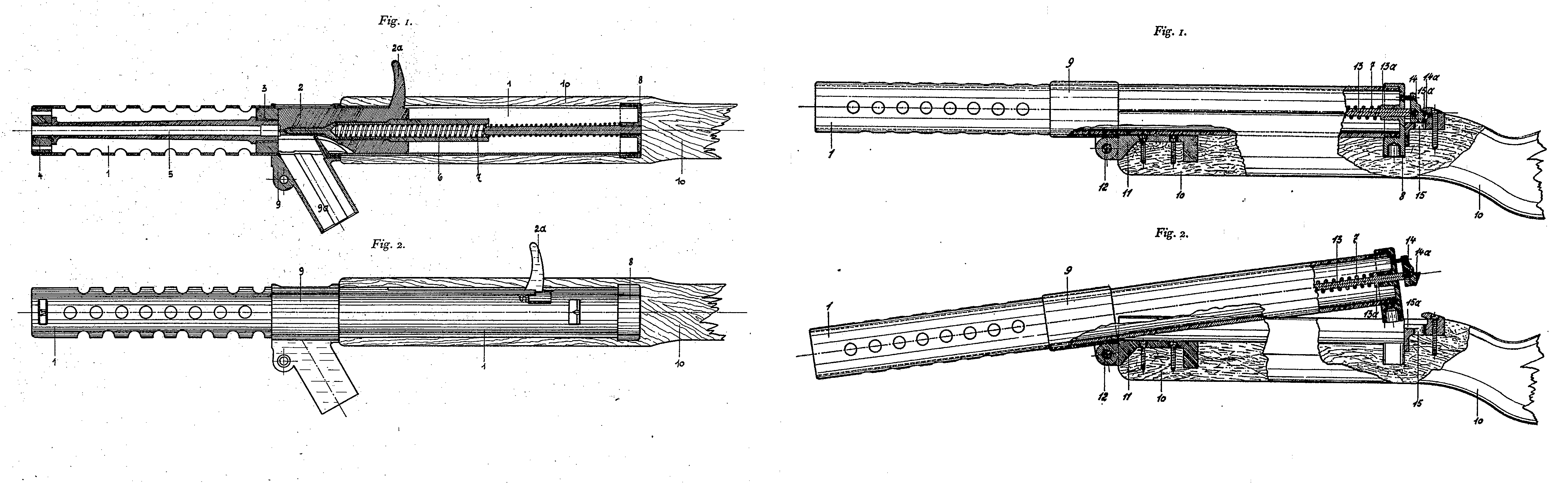
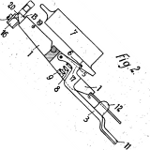
Diagrams from Theodor Bergmann's patents № 319,035 of 30th December 1917 & № 334,450 of 26th April 1918, protecting the bolt mainspring design and tipping receiver assembly of the MP 18,I.
The earliest physical prototype of the MP 18,I that still exists today is in the collection of the Vojenský historický ústav (VHU) in Prague. This gun is serial № 2 - presumably the second MP 18,I ever made - and even in this very early sample it can be seen that most aspects of the design had effectively been finalized already. The only significant difference between this prototype and the final production models that followed is the presence of a twin trigger group, which gives uninterrupted automatic fire from the front trigger and single shots from the rear trigger. This is comparable to the trigger layouts of the Italian OVP and MIDA-Savoia submachine guns which appeared during the same period, though it seems improbable that there could have been any influence from the contemporaneous Italian weapons which had not yet appeared on the battlefields. The name 'M.P. 18,I.' already appears on the top of the magazine housing, indicating not only that this designation had already been bestowed upon the weapon at the factory prior to its adoption by the German Army, but also that the first prototypes could not reasonably have been built any earlier than the final months of 1917, as Theodor Bergmann could not possibly have predicted in 1916 that his machine pistol would not be taken into service for another two years - let alone that the war would even drag on for that long.
Another early pre-production
weapon, serial № 21, exists in the UK. This is identical to the
final production pattern, employing a single trigger mechanism, but
shares the same style of hand-etched identifying markings on the
magazine housing as VHU's serial № 2. In these prototypes, the
designation is engraved in a quite elaborate font (probably
hand-etched), with the serial number at the top and the proofing
stamp below. The style of markings present on these early examples
of the MP 18,I closely aligns with those seen on late production
examples of the lMG 15 n/A light machine gun made in 1918, which
would likely place them in a similar timeframe.
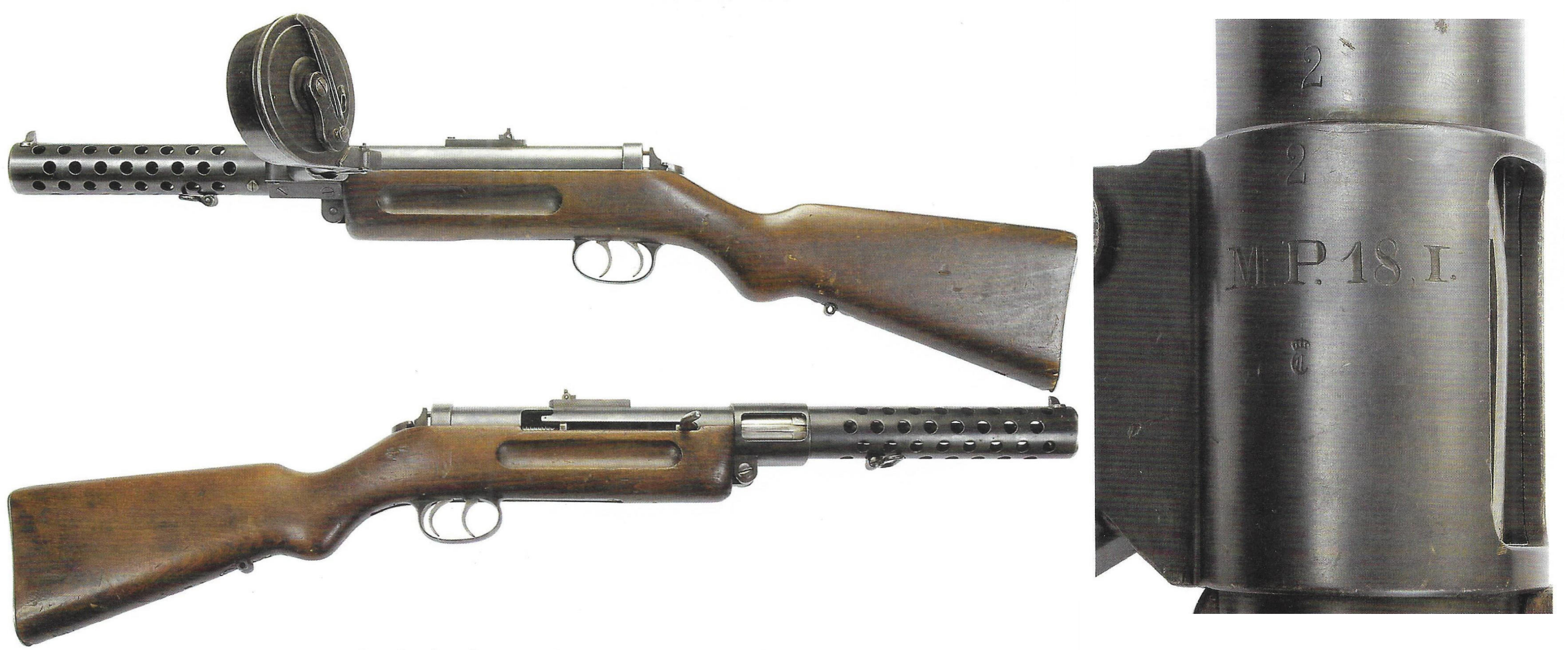
Early prototype MP 18,I by Theodor Bergmann Abteilung Waffenbau, bearing the serial № 2. It appears that the design was originally intended to utilize a twin trigger group, giving
both automatic fire and single shots, however this was not carried over into the production model.
(Vojenský historický ústav Praha)
In the typical mass-produced examples of the gun, the magazine housing bears markings in a simplified font, with the serial number placed below the proofing stamp. Additionally, all known guns from № 21 onward bear the factory stamp 'Theodor Bergmann Abteilung Waffenbau' on the left side of the receiver casing, a marking which is absent from serial № 2.
Trials and adoption
Owing to the lack of available records, the exact circumstances and timeframe under which the MP 18,I was trialled by the Preuß. KM and placed into service remain unclear. However it is known that development of a rival machine pistol design was occurring concurrently at the Andreas Schwarzlose Gesellschaft für Waffenerzeugnisse in Berlin. The Maschinenpistole Schwarzlose, which had been in active development since at least November 1917, was envisaged as a joint Austro-German project, with close collaboration between the Preuß. KM in Germany and its Austro-Hungarian counterpart, the K.u.K. Kriegsministerium, and it was hoped that the weapon would be taken into service in both countries.
It is clear, however, from the records of the K.u.K. KM that the MP Schwarzlose project was met with problems from an early stage. In late 1917 the Austro-Hungarians had ordered a small batch of 100 samples for trial and study, but by February 1918 only a single gun had been sent to the K.u.K. KM as Schwarzlose repeatedly struggled to deliver on small orders. By March, both the German and Austro-Hungarian armies had effectively abandoned the MP Schwarzlose and decided to press ahead with the adoption of rival designs which were more readily available: the Austro-Hungarians with the Sturmpistole M.18, a copy of the Villar Perosa; and the Germans with the MP Bergmann, or MP 18,I. There is some indication that these choices were made somewhat reluctantly, and that both armies had, in fact, thought very highly of the MP Schwarzlose; Generalmajor Ernst von Wrisberg, director of the Preuß. KM's Allgemeinen Kriegs-Departements ('General War Department'), wrote in 1922 that adoption of the MP 18,I was only approved "after the completion of an excellent Maschinenpistole Schwarzlose, suitable for mass production, had not been finished in time". Owing to Schwarzlose's inability to meet the production demands necessary for even a small batch of prototype guns, it is unlikely that thorough comparative trials between the MP Schwarzlose and MP 18,I were ever actually undertaken, and thus the decision to take the MP 18,I into service seems to have been made out of necessity rather than as a result of exhaustive evaluation.

The
Maschinenpistole Schwarzlose, an abortive design made in early
1918 as a competitor to the Bergmann MP 18,I.
(Tula State University)
This decision had evidently been made by the 18th of March 1918, when Generalquartiermeister Erich Ludendorff distributed a table of ordnance projections for the year 1918, which included an order for 50,000 'Maschinenpistole Berger' (presumably an abbreviation of 'Bergmann'). Unlike other small arms ordnance listed in this table such as rifles and machine guns, Ludendorff was unable to give monthly projections for machine pistol production, only a yearly total, as large-scale manufacture of the MP 18,I had not yet commenced by this stage, though a rough monthly average can be discerned from later production figures (see Production and acceptance numbers). Official manuals for the weapon, entitled Leitfaden für die Maschinenpistole 18,I ('Guide to the Machine Pistol 18,I'), were published by the Reichsdruckserei in Berlin the following month. Production of the MP 18,I to meet this military contract presumably commenced at the Bergmann Waffenbau Abteilung around April - May 1918.
Additional note should be made of several other machine pistol designs which appeared in Germany during 1918, including a model by Fritz Walther, which was made in at least two different prototype models. The timeframe of this gun's development is uncertain; the first patent protecting its operational mechanism was applied for on the 25th of May 1918, two months after the MP 18,I had already been adopted. Wrisberg makes no mention of this Walther design in his memoir which may indicate that it either was not completed in time for trial in early 1918, or that it simply failed to make any considerable impression on the Preuß. KM. Another design known as the Maschinenpistole Hoffmann appeared on paper but there is no known evidence that it was ever built in physical form.
The MP 18,I and the Spring Offensive of 1918
A
common and persistent claim in popular histories of the First World
War is that the MP 18,I machine pistol was employed by German Sturmtruppen during the Spring
Offensive (21st March - 18th July 1918), with some sources partially
attributing the German success in the early stages of the offensive
to the use of these guns. These claims are inaccurate, as the MP
18,I had not even been placed into active service by the time that
the offensive was launched. No such guns were used by German troops
in the spring of 1918 and therefore the initial successes of the
operation certainly had nothing to do with the use of machine
pistols.
Raising the
'Maschinenpistole-Trupp' & combat use in the First World War
Troop trials of the MP 18,I
machine pistol were organised by the Preuß-Kriegsministerium
in July 1918, with the 237. Infanterie-Brigade (119.
Infanterie-Division) being selected to receive the first batch of
216 guns for the purpose of evaluating their performance under the
conditions of the Western Front. These were distributed to
Infanterie-Regiment Nr. 46 (1. Niederschlesisches),
Reserve-Infanterie-Regiment Nr. 46, and Infanterie-Regiment Nr. 58 (3.
Posensches). A primary concern of the trials was to
determine the efficacy of the machine pistol in comparison to the
existing MG 08/15 and lMG 08/18 light machine guns as weapons for
'assault defense' (Sturmabwehr,
literally 'Storm defense'), which were themselves recent additions
to the German Army's infantry arsenal. The emphasis placed on this
aspect in particular was perhaps a recognition that by the Kriegsministerium
that, following the abandonment of Operation Michael on
the 5th April 1918, the primary use of the machine pistol was going
to be as a weapon of defense and counterattack against Allied
assaults on German positions.
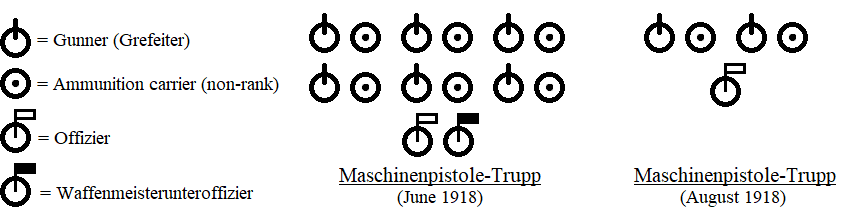
In order to dictate the rate of distribution for this new type of weapon, the Kriegsministerium ordered the creation of the Maschinenpistole-Trupp (or M.P.-Trupp) within the 237. Infanterie-Brigade, a small squad-sized unit which would be armed with MP 18,I machine pistols. In the initial outline of the M.P.-Trupp conceived in June, the unit was sized at 14 men, comprising 6 gunners, 6 ammunition carriers, an officer, and an armourer. It was officially recommended that the guns would be assigned to non-commissioned officers of Gefreiter, Feldwebel, or Unteroffizier rank, whilst ammunition would be distributed to enlisted men. One ammunition carrier was assigned to each gunner, and was issued with an lP.08 long pistol, certainly to maintain logistical compatibility between both weapons. The officer commanded the unit.
Composition of the
Maschinenpistole-Trupp in 237. Infanterie-Brigade, July 1918
| Personnel |
Equivalent
rank |
Armament |
| 1 Offizier |
Commissioned officer |
Pistole
(P.08 or other) |
| 1 Waffenmeisterunteroffizier |
Armourer, equivalent to
Sergeant |
|
| 6 Gefreiter/Unteroffizier |
Non-commissioned officer |
Maschinenpistole
(MP 18,I) |
| 6 Mann |
Private |
lange
Pistole (lP.08) |
Each
Infanterie-, Jäger-,
and Schützen-Kompanie
was to be assigned one M.P.-Trupp. This worked out at 6 guns per
company, 24 per battalion, 72 per regiment, and 216 across the
whole division. The recipients of the guns
were selected at the discretion of the battalion or company
commander, in a similar fashion to the distribution of the
earlier lP.08 long pistol. The issue of the guns themselves to
troops of an NCO rank was an official preference but not a
strict requirement, and there is at least one account of a
company commander temporarily assigning a gun to himself when he
perceived that the situation demanded it (see 17.
Armee). No guns were assigned to M.G.-Kompanies.
During the field testing stage
within the 237. Infanterie-Brigade/119. Infanterie-Division, the
M.P.-Trupp was to be deployed in three differing ordnance
configurations in order to determine the best method by which
ammunition and magazines for the MP 18,I machine pistol could be
distributed. These configurations were labelled 'A', 'B', and
'C', each designed around the quantity of guns issued on a
regimental basis and therefore probably assigned to the IR 46,
RIR 46, and IR 58 respectively.
| Equipment |
'A'
Configuration |
'B'
Configuration |
'C'
Configuration |
Divisional
Total |
| Maschinenpistole
18,I with cover and new type Gewehr
98 rifle sling without eyelet |
72 |
72 |
72 |
216 |
| lange
Pistole 08 with shoulder stock, bag with carrying
strap and an 8-round magazine |
72 |
72 |
72 |
216 |
| Magazine box with 6 drum
magazines (Nürnberger
pattern), with limiting sleeves, but without protective caps,
along with a shortened loaders |
0 |
216 |
144 |
360 |
| M.G. carrying straps |
0 |
144 |
72 |
216 |
| Carrying bag for 5 drum
magazines |
144 |
0 |
72 |
216 |
| Cartridge box with 5 drum magazines (Nürnberger pattern), with limiting sleeves and protective caps, a shortened loader and 480 loose rounds | 216 |
0 |
72 |
288 |
| Cartridge box (Patronenkasten 88) containing 5 packs of 832 pistol cartridges each | 36 |
24 |
36 |
96 |
| Hand cart (MG
08 pattern) with 4 pull straps |
36 |
48 |
36 |
120 |
| Backpacks with carrying
straps |
144 |
144 |
144 |
432 |
| Maschinenpistole technical manual | 16 |
16 |
16 |
48 |
| lange
Pistole 08 technical manual |
16 |
16 |
16 |
48 |
In
June, a training school for the machine pistol, known as the
'M.P.-Lehrkommando',
was established in Mons in order to instruct the troops in the
organisation and deployment of the M.P.-Truppe. Heeresgruppe
Kronprinz Rupprecht was given priority as the first recipient of
MP 18,I machine pistols, to be trained on these guns over the
course of a four month rollout from the 18th July - 27th October.
The four armies under Kronprinz Rupprecht's command
(17. Armee, 2. Armee, 6. Armee, and 4. Armee) were to be issued
with machine pistols in sequential deliveries once the appropriate
training courses had been completed. The first army selected, the
17. Armee, issued an order on 28th of June for each of its seventeen
divisions - ten infantry divisions, six reserve divisions, and one
marine division - to send three men from each battalion (one
comissioned officer, one non-commissioned officer, and one
enlisted rank) to take a short leave of absence from their
regiments and attend the M.P.-Lehrkommando at the dates arranged
by the Kriegsministerium.
By
the time that the first training courses for Heeresgruppe
Kronprinz Rupprecht commenced in mid-July, the size of the
M.P.-Trupp had been officially amended from 14 men to 5 men,
issued with just 2 guns per section. The new composition comprised
1 commissioned officer, 2 non-commissioned officers, and 2
enlisted ranks. The role of the armourer was eliminated. This now
meant that the rate of distribution was reduced from 6 guns to 2
guns per
Infanterie-, Jäger-,
and Schützen-Kompanie (8 per battalion, 24 per regiment, 72 per brigade/division).
The significant reduction in the size of the M.P.-Trupp and the
number of guns allocated to each company was undoubtedly the
result of supply limitations for MP 18,I machine pistols and
concerns that the Bergmann Waffenbau Abteilung would not be able
to supply the necessary quantity of guns to support the initial
projected figure of 6 guns per company.
Kronprinz
Rupprecht of Bavaria himself made personal note of the adoption of
the MP 18,I in his war diary. His entry for the 1st of August 1918
begins:
"Each
company now initially contains two machine pistols with rifle
stocks, particularly suitable for assault defense. These are
essentially light machine guns, each capable of firing 36 rounds
in three seconds."
The
overwhelming majority of recipients will not have received any
practical training in the use of the weapon and familiarisation
was to take place within the regiment, as relayed by officers who
had attended the M.P.-Lehrkommando in Mons. Fresh recruits were
intended to be trained on the weapon via the regimental
Feldrekrutendepots (Field Recruit Depots), which were to be
furnished with one gun each.
Contrary
to popular perception, no special emphasis was placed on the
distribution of MP 18,I machine pistols to the Sturmbataillons.
The Sturmbataillons were essentially training cadres to instruct
regular infantry troops in the application of assault tactics and
thus did not require any greater number of machine pistols. The
number of guns assigned to each Sturmkompagnie was no higher than
regular infantry companies - 2 guns each - and in most surviving
orders and memos concerning the distribution of MP 18,I machine
pistols in 1918, no mention is even given to the Sturmbataillons.
Divisions selected to attend first
M.P.-Kürs
at Mons [17. Armee]
| 1st Course (18th July - 28th July) | 2nd Course (31st July - 10th August) |
|
|
Further
courses were organised for the 2. Armee (13th August - 5th
September), 6. Armee (8th September - 1st October), and 4. Armee
(4th October - 27th October), though with the exception of the 6.
Armee, less is known of the undertaking of these courses and which
divisions were selected to attend them.

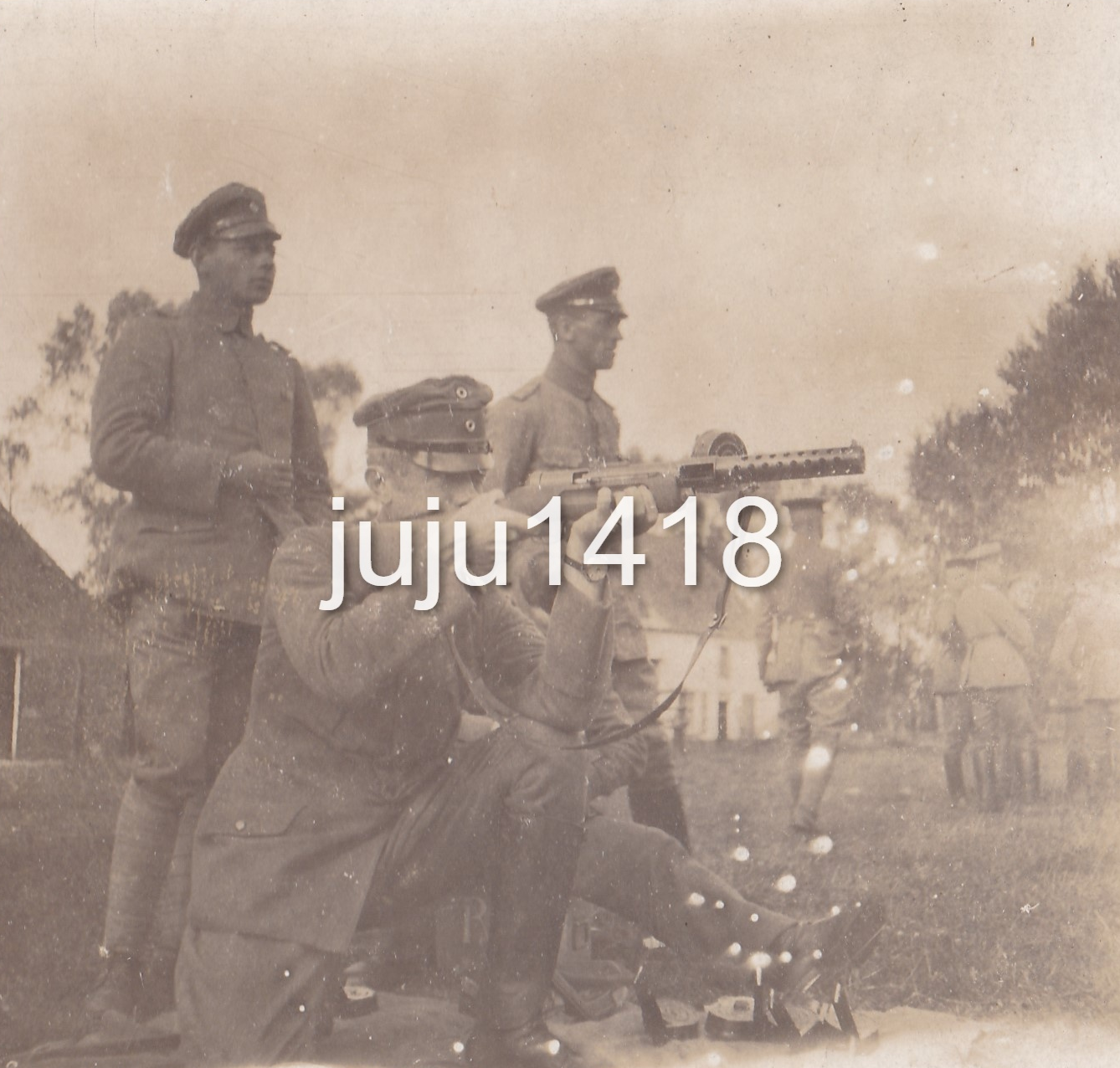
Left: Soldiers training with the MP 18,I in the reduced M.P.-Trupp formation of 5 men (1 officer, 2 gunners, 2 ammunition carriers) at the M.P.-Lehrkommando in Mons, c. July -
October 1918. Right: German officers, probably of the 17. Armee, training with the MP 18,I at the M.P.-Lehrkommando, July 1918 - the earliest known photograph of the MP 18,I.
(Image 2: juju1418 via Flickr)
17.
Armee
An order for infantry regiments to necessary arrangements to raise one M.P.-Trupp per company was circulated amongst the 17. Armee on the 19th August 1918. A copy of this order was subsequently captured by the British from the Infanterie-Regiment Nr. 126 (39. Infanterie-Division) on the 26th of August following combat at Arras.
The 17. Armee was undoubtedly the
best-equipped section of the German Army for MP 18,I machine pistols
during the last months of the war. The 17. Armee was given the
highest priority for the distribution of the MP 18,I and by the 10th
of August, its personnel had completed its training in the use of
the machine pistol. By the 3rd of September 1918, thirteen of the
divisions assigned to 17. Armee were equipped with the MP 18,I at a
rate of two guns per infantry company (8 per infantry battalion, 24
per regiment, 72 per division).
| Divisions |
No.
of guns |
Divisions |
No.
of guns |
| 21. Reserve-Division 41.
Reserve-Infanterie-Brigade
RIR
80
RIR 87 RIR 88 |
72 72
24
24
24
|
214. Infanterie-Division 214.
Infanterie-Brigade
IR
50 (3. Niederschlesisches)
IR 343 IR 358 |
72 72
24
24 24 |
| 48. Reserve-Division 96.
Reserve-Infanterie-Brigade
RIR
221 (Großherzoglich Hessisches)
RIR 222 (Großherzoglich Hessisches) RIR 223 |
72 72
24
24
24 |
234. Infanterie-Division 234.
Infanterie-Brigade
IR
451
IR 452 IR 453 |
72 72
24
24 24 |
| 26. Reserve-Division 51.
Reserve-Infanterie-Brigade
RIR
119 (Kgl. Württembergisches)
RIR 121 (Kgl. Württembergisches) IR 180 (10. Württembergisches) |
72 72
24
24 24 |
83. Infanterie-Division
165.
Infanterie-Brigade
IR 329
IR 330 IR 331 |
72 72
24
24 24 |
| 15. Reserve-Division 30.
Reserve-Infanterie-Brigade
RIR
17
RIR 25 RIR 69 |
72 72
24
24 24 |
3. Marine-Division Marine-Infanterie-Brigade
MR
1
MR 2 MR 3 |
72 72
24
24 24 |
| 2. Garde-Reserve-Division 38.
Reserve-Infanterie-Brigade
RIR
15 (Westfälisches)
RIR 77 RIR 91 |
72 72
24
24 24 |
16. Reserve-Division 31.
Reserve-Infanterie-Brigade
RIR
29
RIR 30 RIR 68 |
72 72
24
24 24 |
| 39. Infanterie-Division 61.
Infanterie-Brigade
IR
126 (8. Württembergisches)
IR 132 (1. Unter-Elsässisches) IR 172 (3. Ober-Elsässiches) |
72 72
24
24 24 |
111. Infanterie-Division 221.
Infanterie-Brigade
FR
73 (Hannoversches)
IR 76 (2. Hanseatisches) IR 164 (4. Hannoversches) |
72 72
24
24 24 |
| 183. Infanterie-Division 33.
Reserve-Infanterie-Brigade
IR
184
IR 418 RIR 440 |
72 72
24
24 24 |
Sturm-Bataillon Nr. 8 1.
Sturmkompagnie
2. Sturmkompagnie 3. Sturmkompagnie 4. Sturmkompagnie |
8
2
2 2 2 |
Several elements of the 17. Armee
are known to have employed the MP 18,I machine pistol in combat
amidst the German retreat during the Hundred Days Offensive (8th
August - 11th November 1918). Ample references to the use of MP 18,I machine pistols by the 17. Armee during fighting around Cambrai appear in September and October 1918.
The 3.
Marine-Division made extensive use of their MP 18,I machine pistols
during the Battle of the Canal du Nord (27th September - 1st October
1918), to varying degrees of success. An account in the memoirs of the
Marine-Infanterie-Regiment Nr. 1 from one Gefreiter Baacke (3. Kompanie)
describes the effective addition to company firepower that the MP 18,I
provided in engaging the 1st and 4th Canadian Divisions, who on the 27th
September attempted a frontal assault on Bourlon Wood:
"On the morning of September 27th, a barrage of artillery fire. We were alerted and deployed between Cantaing and Bourlon Wood, with a line of sight to the woods. We were in an artillery position, with Württemberg troops in front of us. We scrambled to spread out, as we were being shot at by German machine guns from Bourlon Wood. In the afternoon, we were ordered to counterattack between Cantaing and Anneux. We initially advanced only a short distance, as a large number of English aircraft were constantly circling overhead. Heavy fire could be heard to our left, but we could not yet see anything from the British.
We were already quite far from the village
of Anneux when I spotted the English ahead. Their line was running
directly towards us, but they could not see us due to the uneven
terrain. We had advanced to within 30 metres of them when they noticed
us because of our fire directed at their left flank. We couldn't get
our light machine gun to fire because the terrain was slightly uphill.
So I had a light machine gun slung over my shoulder, the others did
the same, and in this way we were able to flank the Englishman with
our light machine gun. We had just begun our fire in the room when the
English also went up in arms and fled. We advanced further, and the
English became confused. The English officers could no longer hold
their men. We were now lying behind
the remains of a wall and had our machine guns and machine pistols
in action. The English fled in small groups. If the
Württembergers, to whom we had attached ourselves, had still been
there, we would have captured the whole group. It was beginning to get
dark, and we were in danger of being surrounded on the right. I wanted
to get a few more Englishmen who were a little ahead of us and
couldn't retreat, but the others stopped me."
By the 29th of September, the MIR 1 had fallen back to Noyelles-sur-Escaut on the outskirts of Cambrai. The MIR 1 took heavy losses on this day, resulting in the destruction of the regiment's I. Bataillon. The commander of 4. Kompanie, Leutnant Rinder, described the punishing conditions faced by the regiment during this battle, which in many ways prevented the MP 18,I from making a notable impact:
"As it grew light, I had just enough time to secure the manning of the trench; there was no time left for another patrol towards the enemy. I had to assume that the enemy was on this side of the canal bank. I ordered two heavy machine guns to take up a higher position behind the line and to prepare my three light machine guns for firing. The machine pistols were switched to the old saps forward. I couldn't create a staggered formation for my position, as that would have exposed too large a stretch. The men were overworked and exhausted. In the lower-lying areas, especially in the canal bed, there was thick fog at daybreak. My visibility was about 250 metres.
Around 7:30 a.m., the enemy artillery
began to increase. My left wing Unteroffizier came running with the
report that the elements of the 3. [Kompanie]
[Inf. Regt.] N. 64, to our
left, were retreating towards Masnières. Since I had clear orders to
hold this position to the last man, and there was no sign of the enemy
yet, I ordered the left flank group to increase their vigilance and to
link up with the 3. Kompanie by patrolling. Meanwhile, our position
was under very well-directed artillery fire. The trench took several
ricochet hits, and sorties were occurring. Unteroffizier
Rothärmel, one of the oldest and most capable NCOs in the company,
reported to me that his light machine gun was no longer operational,
and a machine pistol had also failed. This was another serious
setback to our fighting strength. I deeply regretted that we
had had to take up our position in front of the Hagen Line. There, at
least, would have been some barbed wire obstacle. Now we had no barbed
wire entanglements whatsoever in front of us. Plöhlich saw dense
English skirmish lines appear at a distance of about 250 metres,
followed by dense columns. The order was now, "to hold the position to
the last man.""
The costly
battles during the fighting around Cambrai severely reduced the fighting
capability of the 17. Armee's divisions, and it appears that in some
regiments, machine pistol losses were disproportionately high compared
to other materiel, presumably because the company M.P.-Truppe were
habitually assigned to forward positions. By the 9th October 1918, the
Marine-Infanterie-Regiment Nr. 2 reported only having three MP 18,I
machine pistols remaining across the entire regiment, compared to eight
MG 08 medium machine guns and eighteen MG 08/15 light machine guns. The
3. Marine-Division was transferred to the 18. Armee later in October
where it would see further action at the Battle of the Selle (see: Heeresgruppe Deutscher Kronprinz).
Another vivid first-hand
account of the weapon's use in combat during the war comes from the
official memoir of the Kgl. Württembergisches Reserve-Infanterie-Regiment
Nr. 119 (26. Reserve-Division) which describes an abortive German
counterattack against the advancing Canadian Corps on the 1st
October 1918 - the final day of the Battle of Canal du Nord - in which the MP 18,I was employed by
Leutnant Eugen Rettenmaier during an assault against a stubborn
Canadian position:
"Around 4 o'clock in the afternoon,
the German counterattack north of Ramillies got underway. As the
firing lines reached and attempted to cross Hill 78, 4km east of
Tilloy, German fire struck their ranks, causing hesitation and
confusion, so that the attack recoiled back to its starting
position. An enemy machine gun on this hill continuously harassed
the reserves behind Morenchies and prevented movement and
communication. A fleeing Englishman sought cover behind the
embankment that concealed it. This was observed by Leutnant Eugen
Rettenmaier, the commander of 5. Kompanie, who, with his walking
stick in his hand, was helping to recover wounded Englishmen.
"He'll be taken care of later!" he said to his men.
Then
he had the nest continuously fired by two heavy machine guns to
hold down the crew, borrowed a
machine pistol from one man, took the
volunteers Kurt König (5. Kompanie) and Unteroffizier Valb with
him and sneaked up on the annoying nest. When he got close
enough, he waved his handkerchief. The machine guns stopped.
Rettenmaier and his brave companions rushed at the enemy in one
long, swift leap. How astonished he was when, instead of the one
Englishman, he saw six tree-tall guys in front of him! Two
wanted to defend themselves and took aim. Only one fired a shot.
A pistol shot shattered his arm.
The others raised their hands and Rettenmaier, with 6 Canadian
Highlanders and 3 Lewis guns, retreated to the battalion, safe
and happy."
A somewhat muddled account likely
referring to an MP 18,I machine pistol also appears in the memoir of
the Reserve-Infanterie-Regiment Nr. 80 (21. Reserve-Division), again
during fighting in early October 1918 near Cambrai, as recalled by
Unteroffizier Paul Schlieger (8. Kompanie, 4. Pioniere):
"Approximately 200 - 300 metres to our
left lay another farmhouse, which was apparently still occupied by
the enemy. To investigate, Gefreiter Anton Heinz and I advanced
further, while the company's comrades remained in the hollow way,
covering us with our rifles at the ready. If we reached the
farmstead unchallenged, the company would follow. A riddled
building lay beside a field path leading to the estate, of which
only the foundations remained. It seemed to me that something was
moving among the ruins.
We approached with our rifles at the
ready and, to our surprise, found a whole group of Englishmen in
the still well-preserved cellar. A sergeant and eight men crawled
out with their hands raised. All but one had already unbuckled
their leathers, and even this one couldn't tear them off quickly
enough when I made an unmistakable gesture with my rifle. We
signaled to our prisoners that they should slink away. The two of
us then thoroughly examined the cellar and found many nice and
useful items in the Tommies' luggage, things that had
unfortunately become very rare on the German side in the fourth
year of the war. Among other
things, I discovered a brand-new German M.G.-pistol 08/15 with
45 rounds of ammunition in a knapsack. Since my own
pistol had gone missing just a few days earlier, this find gave me
particular pleasure."
The reference to an 'M.G.-Pistole
08/15' is clearly a conflation in terminology of both the MP 18,I
machine pistol and the MG 08/15 light machine gun, though the
context under which the weapon is described as being used as a
replacement for Schlieger's missing pistol indicates that the weapon
was probably an MP 18,I. The presence of this weapon within a
British forward position also raises an interesting implication -
though no doubt this was a recent capture from German troops during
the British advance, could these British soldiers have kept it for
their own use? There is no definitive record of Allied troops making
use of captured MP 18,I machine pistols during the war, though it is
certainly not implausible that there may have been isolated
incidents of 'Tommies' making temporary use of captured guns.
The 17. Armee may possibly have
loaned a small number of MP 18,I machine pistols to the 6. Armee in
October 1918, owing to delays in the delivery of guns to the front
during this final stage of the war.
2.
Armee
Despite being included in the initial
schedule for the M.P.-Lehrkommando, with training courses arranged for
13th - 23rd August (1st course) and 26th August - 5th September (2nd
course), no data is currently available concerning the actual
distribution of MP 18,I machine pistols to the 2. Armee. Machine pistol
figures for the 2. Armee are omitted from the distribution memorandum of 3rd
September 1918 compiled by Heeresgruppe Kronprinz Rupprecht,
as at that time the 2. Armee had been grouped with the 18. Armee to form
the short-lived Heeresgruppe Boehn
from the 12th August. This was disbanded on the 8th October and the 2.
Armee was subsequently transferred back under the command of Kronprinz
Rupprecht until the end of the war, though remained situated directly
alongside the 18. Armee throughout the final battles on the Western
Front.
The first
recorded use of MP 18,I machine pistols in combat occurred within the 2.
Armee, by the 119. Infanterie-Division who had received the first batch
of guns for field testing. On the first day of the the Battle of Amiens
(8th - 12th August 1918), the 119. Division was transferred from the 18.
Armee reserve to the 2. Armee, and deployed around the town of Le
Quesnel on the 9th August. Initially, the 119. Division achieved notable
success with the MP 18,I; the Infanterie-Regiment Nr. 58 (3. Posensches)
repelled an attack by the British 1st Cavalry Division on the nearby
village of Maucourt using their machine pistols. However, when the 1st
Cavalry Division was relieved by the 3rd and 4th Canadian Divisions
later in the day, the 119. Division was forced to withdraw and Le
Quesnel was captured by the Canadian Corps, resulting in the loss of
several machine pistols. Continual losses of the 119. Division's machine
pistol strength occurred throughout the battle.
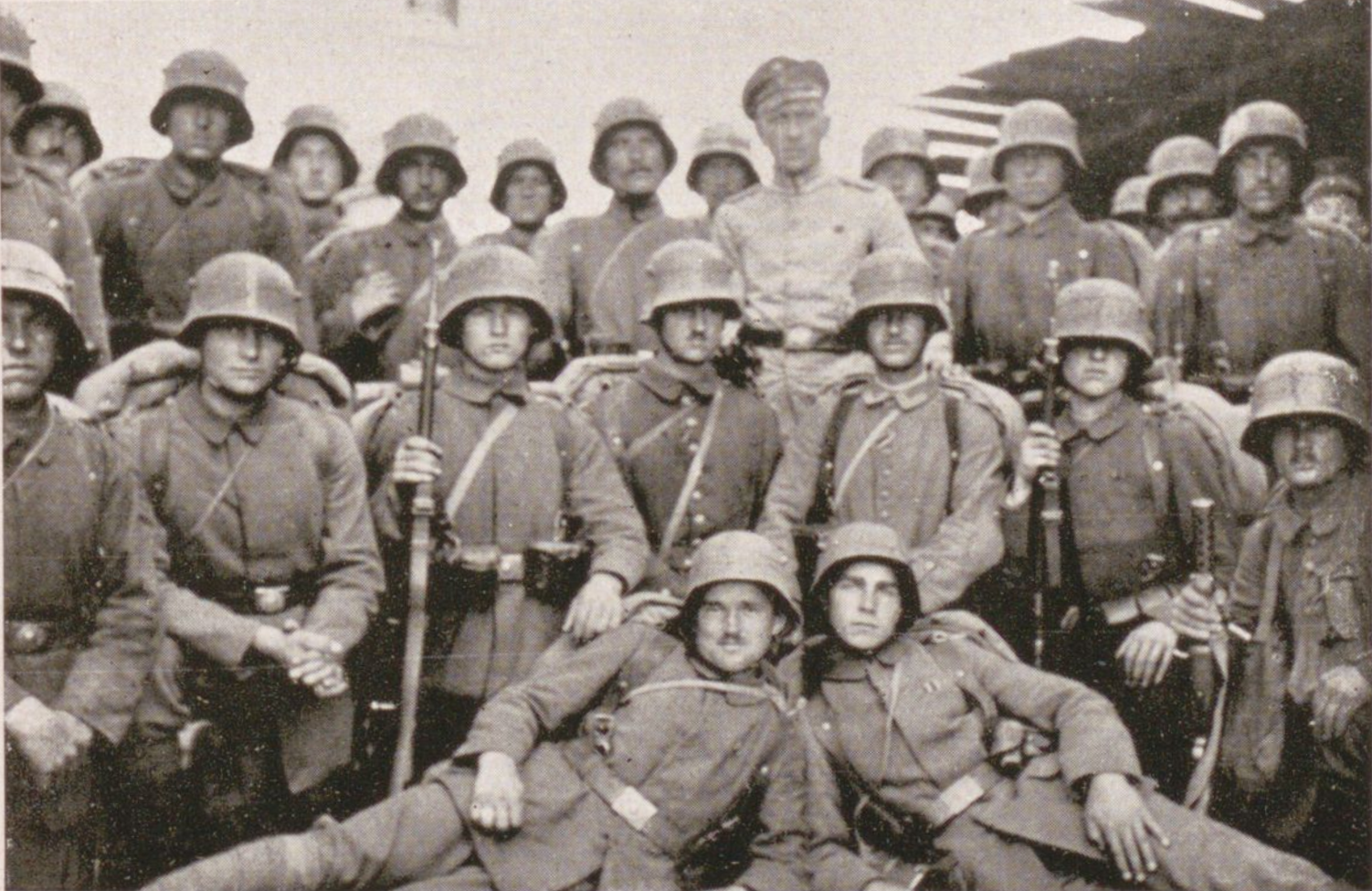
2.
Zug, 10. Kompanie, Infanterie-Regiment Nr. 46 (1. Niederschlesisches)
in early August 1918, with an MP 18,I machine pistol.
The platoon's acting commander, Offizier Stellvertreter Paul Federau
(pictured), was killed in action at Amiens on the 9th August,
just a few days after this photograph was taken. It was on that day
that the MP 18,I was used in combat for the first time.
The memoirs of the Kgl. Württembergisches Infanterie-Regiment Nr. 413 (204. Infanterie-Division) describe what was possibly the final combat use of the MP 18,I machine pistol during the war, during a skirmish near the Belgian border on Armistice Day:
"On November 11, 1918 – it had just become
light – another patrol of the regiment advanced in the general
direction of Maubeuge to determine if and where the British were
following. The patrol – which, as far as I recall, consisted of
Leutnant (Reserve) Stefan and 5-6 men – advanced several mileage
without encountering the enemy. Suddenly,
they spotted a fairly strong enemy cavalry patrol, which was almost
completely wiped out by Stefan's patrol, whose men were equipped
with machine pistols. This was the last combat activity of
the regiment and probably also of the division, because while the
patrol was still in no man's land, news arrived that the armistice had
been concluded and hostilities were to cease at noon. One would think
that this news would have caused joy and jubilation, especially after
all the hardship of the past few weeks, but the opposite was true.
Dejected, the people discussed the event, and only the awareness of
having resisted the enemy to the very last second in the utmost
fulfillment of duty and of having kept the horrors of war and its sad
consequences away from our beloved homeland allowed us to overcome the
bitterest hour of our soldiers' lives."
| Divisions | No. of guns |
| 119. Infanterie-Division 237.
Infanterie-Brigade
IR
46 (1. Niederschlesisches)
RIR 46 IR 58 (3. Posensches) |
216 216
72
72 72 |
6.
Armee
The 6. Armee was third in
priority to receive MP 18,I machine pistols, with its delegates from
its divisions scheduled to receive training at the M.P.-Lehrkommando
from the 8th - 18th September (1st course) and 21st September - 1st
October. The Armee-Oberkommando 6 (A.O.K. 6) drew up a list of ten
divisions which were to receive MP 18,I machine pistols once the
necessary training had been completed.
The divisions of the 6. Armee
intended to receive MP 18,I machine pistols following this training
course were as follows:
| Divisions |
No.
of guns |
Divisions |
No.
of guns |
| 38. Infanterie-Division 83.
Infanterie-Brigade
IR
94 (5. Thüringisches)
IR 95 (6. Thüringisches) IR 96 (7. Thüringisches) |
72 72
24
24
24
|
4.
Ersatz-Infanterie-Division* 13.
Ersatz-Infanterie-Brigade
IR
360
IR 361 IR 362 |
72 72
24
24 24 |
| 12. Kgl. Bayer.
Infanterie-Division
22.
Kgl. Bayer. Infanterie-Brigade
Kgl.
Bayer. IR 26
Kgl. Bayer. IR 27 Kgl. Bayer. IR 28 |
72 72
24
24
24 |
36. Infanterie-Division 71.
Infanterie-Brigade
Gren.R
5 (4. Ostpreußisches)
IR 128 (Danziger) IR 175 (8. Westpreußisches) |
72 72
24
24 24 |
| 5. Kgl. Bayer.
Infanterie-Division
10.
Kgl. Bayer. Infanterie-Brigade
Kgl.
Bayer. IR 7
Kgl. Bayer. IR 19 Kgl. Bayer. IR 21 |
72 72
24
24 24 |
16. Infanterie-Division
30.
Infanterie-Brigade
IR 28 (2.
Rheinisches)
IR 29 (3. Rheinisches) IR 68 (6. Rheinisches) |
72 72
24
24 24 |
| 9. Reserve-Division 18.
Reserve-Infanterie-Brigade
RIR
6
RIR 19 IR 395 |
72 72
24
24 24 |
8. Infanterie-Division 16.
Infanterie-Brigade
IR
72 (4. Thüringisches)
IR 93 (Anhaltisches) IR 153 (8. Thüringisches) |
72 72
24
24 24 |
| 2. Garde-Reserve-Division* 38.
Reserve-Infanterie-Brigade
RIR
15 (Westfälisches)
RIR 77 RIR 91 |
72 72
24
24 24 |
12. Reserve-Division 22.
Reserve-Infanterie-Brigade
RIR
23
RIR 38 RIR 51 |
72 72
24
24 24 |
*Transferred from the 17. Armee;
already trained and issued with the MP 18,I.
Though this course was
undertaken, there is evidence that the guns intended for the 6.
Armee were either delivered late or never at all. A telegram from
the Artilleriedepot Karlsruhe Baden to the A.O.K. 6, dated 23rd
October 1918, reports that the machine pistols allocated to the 6.
Armee had been awaiting delivery since the 9th October but no action
had yet been taken by the A.O.K. 6 to arrange their collection. In
the meantime, the A.O.K. 6 requested the loan of 16 machine pistols
from the 17. Armee. By this time, it was far too late for German
troops to glean any advantage from the receipt of MP 18,I machine
pistols, and the armistice would be signed just 19 days later. The 2.
Garde-Reserve-Division, who had been issued with MP 18,I machine pistols
while serving under the 17. Armee in August, were transferred to the 6.
Armee on the 5th of September 1918 and were posted on the outskirts of
Lille opposite the British Fifth Army. On the first day of the Fifth
Battle of Ypres (28th September - 2nd October 1918), the division's
Reserve-Infanterie-Regiment Nr. 91 employed the MP 18,I in repelling an
attack by British troops at Neuve-Chapelle on the 28th September 1918.
This action was described by Leutnant Nebauer, the commanding officer of
the regiment's 3. Kompanie: "Soon after it became quiet again, and I
was just about to go forward to see if anything had happened, a man
from the first platoon came breathlessly up the trench and shouted
from a distance: "The first trench is full of Englishmen!" At first, I
couldn't believe my ears. In broad daylight? At midday, when the sun
was blazing down on the battlefield? But in war, there's not much time
for deliberation. It's all about action. Trusting in my own brave
company, I refrained from requesting assistance from the battalion
commander, called up the third platoon, which was designated as a
Stoßtrupp for such situations, and attacked. Two light machine guns
from the Stoßtruppe and one light machine gun from the second platoon,
positioned at a staging point between the front line and the main
battle line, flanked the enemy in the trench they occupied, while the
Stoßtrupp itself, reinforced by part of the second platoon, pressed
forward. The English had occupied the trench to the
right. Vizefeldwebel Geese, with his first platoon, had, as ordered,
withdrawn to the left during the enemy attack, as was often practiced
during periods of respite. When he saw us approaching in the trench,
he and his platoon immediately joined our assault force. From shoulder
to shoulder, we rolled up the trench to the right, pushing back the
enemy, who were firing heavily on us and throwing hand grenades. Those Englishmen who fled from the trench
again received heavy fire from cleverly positioned light M.G.s and
M.G.-Pistols and suffered heavy losses. Many did not reach
the English trench again. We captured two wounded enemy soldiers, a
machine gunner, and other weapons. In an hour, it was all over; the
trench was back in our hands." Vizefeldwebel
Geese won the Iron Cross First Class for his actions on this day. Later on
the 2nd October, the final day of the battle, the RIR 91 were ordered to
reposition from Englos to Armentières. The regiment made
effective use of a small force of men armed with MP 18,I machine pistols
to hold back the British advance whilst the rest of the battalions
withdrew safely, as explained by Leutnant R. Steinberg: "Had we carried out the order as it was
given, we certainly wouldn't have been able to get our companies out
of the position unharmed. We therefore decided to let the companies
withdraw, while we, the company commanders, each with a strong patrol
and pioneer detachment, remained in the trench. We
kept our recently issued machine-gun pistols and, by constantly
moving around and firing them, feigned a strong M.G. arsenal.
Only when the companies had passed through the barrage zone did we
begin blowing up the position. Immediately, as we had correctly
suspected, the British gas barrage began, but Tommy didn't dare
attack. Then we, too, withdrew undetected by the enemy, blew up the
dugouts in the second line, as well as the crossroads at Halpegarbe,
and, using gas masks, got through without losses."
4.
Armee
The 4. Armee was the fourth and lowest in priority for the distribution of MP 18,I machine pistols. The training courses for the divisions of 4. Armee took place from 4th - 14th October (1st course) and 17th - 27th October (2nd course). The official memoir of the Kgl. Sachs. Infanterie-Regiment "Kronprinz" Nr. 104 appears to confirm that this training took place, as there is mention of a Leutnant Grünert of the regiment's 2. M.G.-Kompanie who was despatched to the M.P.-Lehrkommando after the 20th September 1918. A description of the MP 18,I is also given in the chapter 'The Development of Mortars and Infantry Close-Combat Weapons in the Regiment ', indicating that members of the regiment were at least familiar with the gun:
"Another valuable addition to the M.G.
for assault defense was the invention of the machine pistol in the
later months, which, due to its light weight, allowed for
standing, unsupported firing. The 32 rounds in its drum magazine
could be fired in 3.5 seconds. Because our enemies are aware of
the effectiveness of these weapons, they are no longer permitted
in the inventory of the new Reichswehr."
The likelihood of any guns being
delivered to the 4. Armee before the armistice of the 11th November,
however, seems slim. No guns had been assigned to the 4. Armee at
all by the 3rd September, and the projected completion of their
machine pistol training by the 27th October leaves very little time
for a full shipment of MP 18,I machine pistols to be delivered and
issued to the front before the armistice.
Heeresgruppe
Deutscher Kronprinz
Only incomplete records can be sourced on the use of the MP 18,I machine pistol by German divisions assigned to the Heeresgruppe Deutscher Kronprinz, comprising the 18. Armee, 7. Armee, 3. Armee, and 1. Armee. Evidence indicates that Heeresgruppe Deutscher Kronprinz was trained on the MP 18,I machine pistol concurrently with Heeresgruppe Kronprinz Rupprecht, though the order in which the relevant armies were selected to receive training and weapons is currently not certain.
18. Armee
The first
MP 18,I machine pistols delivered to the 18. Armee were those
distributed to the 119. Infanterie-Division for field testing; however
these were likely not used in combat until the 119. Division transferred
to the 2. Armee of Heeregruppe Kronprinz Rupprecht on the 9th August
1918. The 18. Armee and 2. Armee were brought together under the
Heeresgruppe Boehn from the 12th August, though this union was
short-lived and by the 8th October, the 18. Armee was reassigned to the
Heeresgruppe Deutscher Kronprinz. It is not known to what extent the
formation and disbandment of Heeresgruppe Boehn affected the existing
schedules for machine pistol training and issue.
The 18.
Armee was likely given the highest priority for the delivery of MP 18,I
machine pistols within the Heeresgruppe Deutscher Kronprinz. The
divisions of the 18. Armee had possibly been equipped with machine
pistols by the time of the Battle of the Selle (17th - 25th October
1918), as several guns were captured by the British Fourth Army engaged
against elements of the 18. Armee around Wassigny, including the 5.
Reserve-Division and 24. Infanterie-Division (Kgl. Sachs.); though this
sector was also defended by recently transferred elements from the 17.
Armee which had already been issued with the MP 18,I, including the 3.
Marine-Division and 15. Reserve-Division, who may also have been the
source of the guns encountered by the Fourth Army.
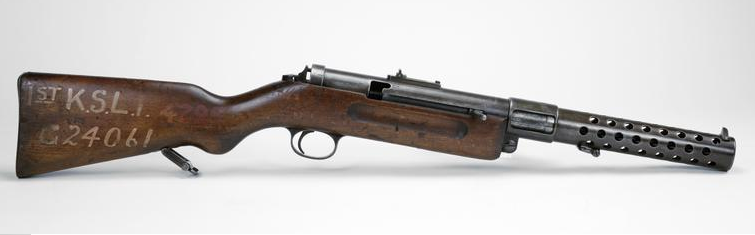
MP 18,I machine pistol captured on the 17th of October 1918 by the 1st Battalion King's Shropshire Light Infantry at Busigny Wood, near Vaux-Andigny.
Likely issued to the 15. Reserve-Division or the 3. Marine-Division in August 1918, whilst both divisions were still part of the 17. Armee.
(Imperial War Museum)
3. Armee
Evidence that the 3. Armee were called on to send delegates to attend the M.P.-Lehrkommando in Mons exists in the form of a letter written by a Leutnant of the Landwehr-Infanterie-Regiment Nr. 116 from Feldpost Nr. 35 (the mail address of the M.P.-Lehrkommando), which was sent to a fellow officer of the regiment on the 24th September 1918. The recipient officer was subsequently captured by the French in October and an excerpt of this letter was reproduced in a French memorandum, issued on the 11th October 1918:
"We are going to take a course of
instruction on the new weapon in the Army of Crown Prince Wilhelm
[...] I think this new weapon is
excellent. It has many advantages over the light machine gun, fires 96
shots in 30 seconds. The weapon is lighter than the Model 98 rifle."
The date of this course seems to
coincide with that of the 6. Armee of Heeresgruppe Kronprinz Rupprecht.
Whether the 3. Armee also experienced delays in the receipt of these
weapons as the 6. Armee did is not known. Nonetheless it is unlikely
that they received any guns earlier than October under the timeframe of
their training course, and evidently the French Army had not encountered
any examples in service with the LIR 116 at the time that the above
letter was captured.
Other
Army Groups
There is currently no known
record that MP 18,I machine pistols were ever distributed to Army
Groups other than Heeresgruppe Kronprinz Rupprecht or Heeresgruppe
Deutscher Kronprinz before the end of the war in November 1918.
Given that an order of 50,000 guns was placed, it is almost certain
that distribution of the MP 18,I was intended to stretch across the
entire German infantry, however it is currently unclear whether any
M.P.-Lehrkommando courses were ever established outside of Mons and
there is no known mention of the use of machine pistols in the memoirs of
any regiments outside of the 17. Armee and 2. Armee.
For most German infantry divisions in late 1918, the Luger P.08 and lP.08 remained the primary close-combat armament of the assault troops and pioneers. The official memoir of Badisches Leib-Grenadier-Regiment Nr. 109 (28. Infanterie-Division, Heeresgruppe Gallwitz) explains that "The machine pistol, completed in the autumn of 1918, in which shots followed each other automatically like a machine gun, was not issued to our regiment. Along with hand grenades, pistols were the standard equipment for assault troops during patrol operations and when clearing trenches."
Regimental
and company markings on weapons issued to the IR 46
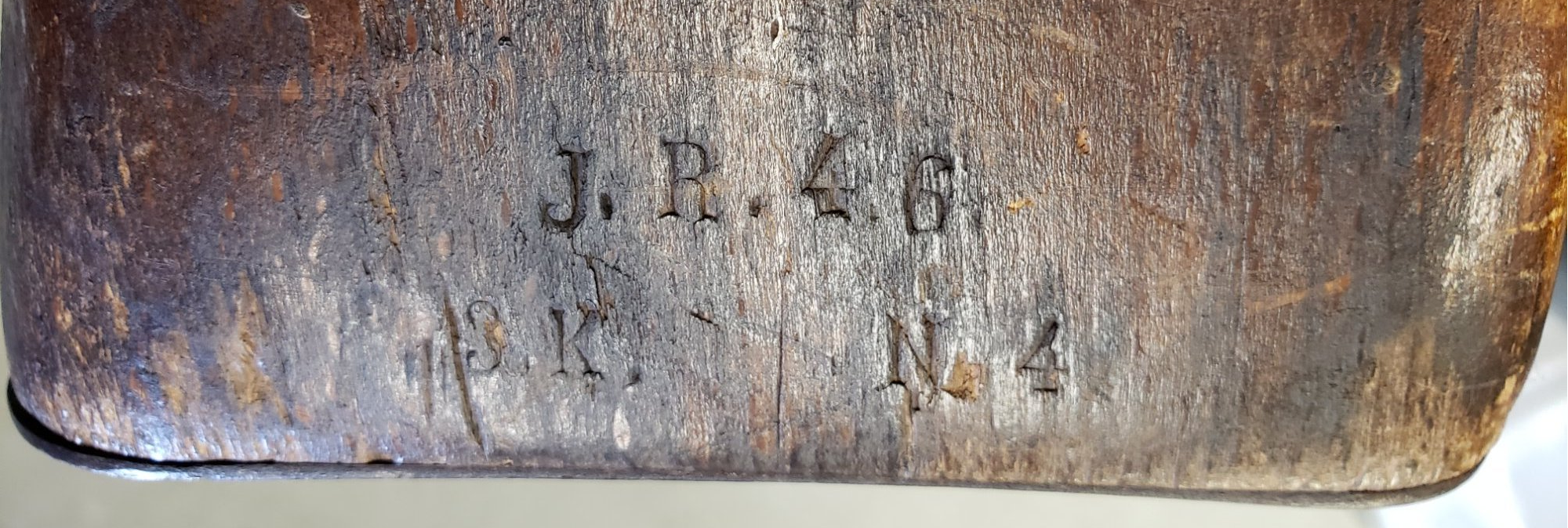
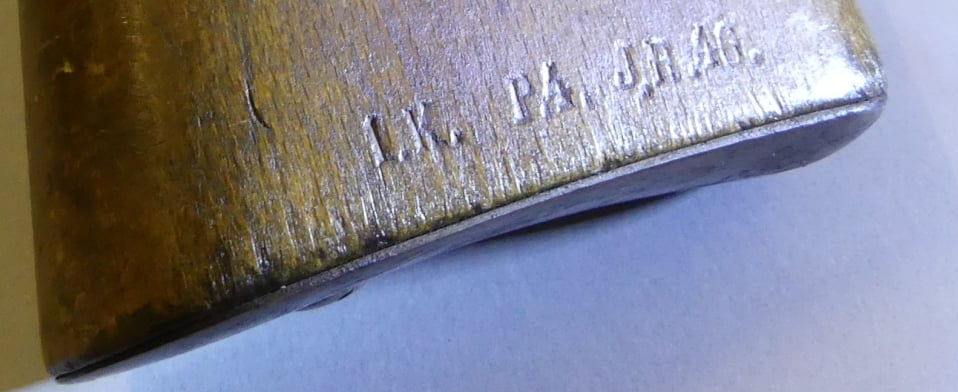
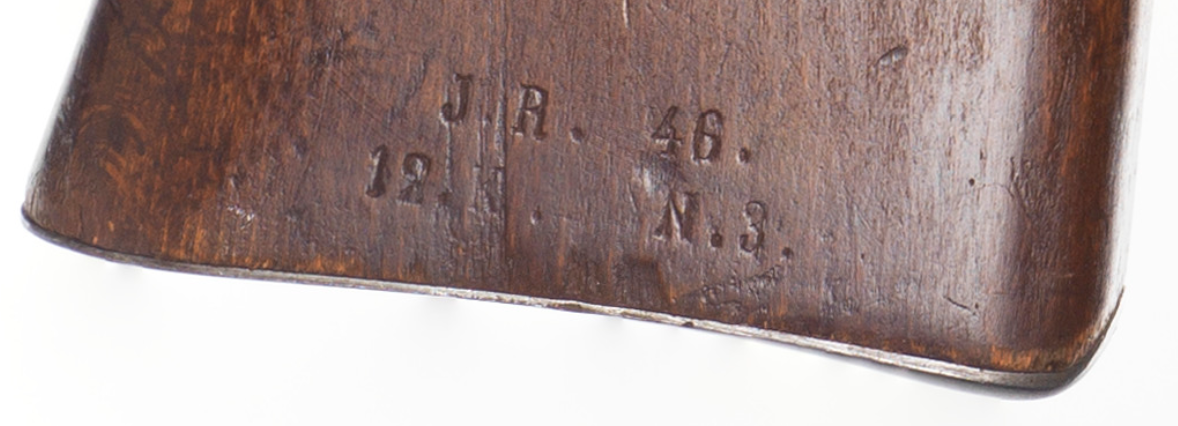
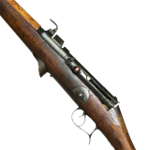
MP 18,I machine pistols bearing regimental markings of Infanterie-Regiment Nr. 46 (1. Niederschlesisches) on their buttstocks; three of the first such guns ever issued to the 119. Infanterie-Division for field testing in July
1918. Likely captured by British and Canadian troops during the Battles of Amiens and Mont Saint-Quentin in August - September 1918. The guns in centre and right are serials № 377 and № 193 respectively.
(Images 1 & 2: Guest user and mtaylor of greatwarforum.com respectively)
(Image 3: Canadian War Museum)
At least four surviving examples of
the MP 18,I bear regimental stamps on the buttstocks, all of which
belong to the Infanterie-Regiment Nr. 46. The initials 'J.R.46.'*
are accompanied by two other abbreviated markings, a 'K.' stamp and
either a 'P.' or an 'N.' stamp, all of which are numbered. There is no
known documentation which explains the precise meaning of these stamps,
or why they were added.
It can be reasonably inferred, however, that since M.P.-Trupp squads were assigned on a company level, the 'K.' stamp stands for 'Kompanie', with the associated number identifying the specific company (i.e. '1.K.' = '1. Kompanie/1st Company'). The highest identified 'K.' stamp is 'K.12.', which is entirely consistent with the number of infantry companies within the IR 46 (12 companies across 3 battalions).
The meaning of the 'P.' or 'N.' stamp is less clear. These initials never appear together on the same gun, but seem to serve the same purpose as they are located after the 'K.' stamp. A credible explanation is that these initials are intended to serialize the number of guns within each individual company; for instance, '1.K. P.1.' would denote the first gun of 1. Kompanie, '1.K. P.4.' would denote the fourth gun of 1. Kompanie, and so forth. If this is correct, then the 'P./N.' stamps would range from 1 - 6, for the 6 guns assigned to each infantry company.
Why this stamp alternates between using the initial 'P.' and 'N.' is less clear. The initial 'P.' is only observed on guns in the possession of 1. Kompanie, whereas the initial 'N.' is seen on guns possessed by 3. Kompanie and 12. Kompanie. It is possible that 'P.' stands for 'Pistole', whereas 'N.' stands for 'Nummer', effectively conveying the same meaning but using different terms.
The inconsistency in both the lettering and layout of the markings might suggest that they were not all created by the same hand. They might have been added on an individual level by the Waffenmeisterunteroffizier (master armourer) assigned to each M.P.-Trupp. The armourer of 1. Kompanie may have preferred the use of the initial 'P.' for 'Pistole', whereas the armourer of the 3. and 12. Kompanies may have preferred 'N.' for 'Nummer'.
The intent of adding these markings
in the first place was likely to tightly control the number of weapons
assigned to each company during the field testing stage, identify
missing guns, and ensure that lost guns were returned to the IR 46 if
recovered by other German regiments. That there are no known regimental
stamps beyond those of the IR 46 indicates that the practice was unique
to the early stage of issue, and was no longer deemed necessary after
the main rollout of weapons across other divisions after August 1918.
| Serial |
Regimental
stamp & layout |
Probable
meaning |
| 146 |
1.K.
P.2. J.R.46.
|
1. Kompanie, Pistole 2,
Infanterie-Regiment 46 |
| 193 |
J.R.
46.
12.K. N.3. |
Infanterie-Regiment 46, 12. Kompanie, Nummer 3 |
| 377 |
1.K.
P.4. J.R.46.
|
1. Kompanie, Pistole 4,
Infanterie-Regiment 46 |
| Unknown |
J.R.46.
3.K. N.4. |
Infanterie-Regiment 46, 3. Kompanie, Nummer 4 |
*In contemporary
German typography, the letter 'I' was often written as a 'J'. The use of
'J' here does not imply 'Jäger-Regiment', as has been previously
speculated.
German and Allied assessments of the MP 18,I
The German Army appears to have
been largely satisfied with the performance of the MP 18,I at the
front. The feedback of the field testing conducted by 119.
Infanterie-Division was compiled into a report by the O.H.L., a
summarised copy of which was sent to Heeresgruppe Kronprinz
Rupprecht on 18th September 1918. The overall function of the
weapon's firing action and ballistic efficacy was deemed adequate,
though flaws were detected in the design of the TM.08 magazines and
the magazine feed itself.
"The machine pistol has proven itself very effective in patrol engagements and on field patrol due to its high accuracy and immediate readiness to fire.
A major advantage over the light machine gun is that the machine pistol can be used in any firing position and, due to its low weight, is easy and quick to handle. The machine pistol case is considered cumbersome. It is best left behind during movement. The magazine loader and spare parts are then carried in a pouch (tent pole pouch) on the belt. In this way, each pistol and magazine ammunition carrier can carry five loaded 32-round magazines, as well as 800 loose rounds.
Malfunctions were sometimes caused by the magazine lips being too sharp and easily bending, allowing metal shavings from the cartridge cases to fall into the chamber and obstruct its movement. On some magazines, the magazine catch does not engage in the notch on the neck of the magazine.
No particular lessons of value for training have been learned. The aforementioned malfunctions can be easily remedied by a gunsmith or by replacing the magazine."
The problems reported in the magazine feed of the MP 18,I may have served as an impetus for the development of the subsequent models MP 18,III and MP 18,IV (see Experimental variants II, III, & IV), both of which employed improved feed systems which replaced the TM.08 drum magazine with a more reliable rectangular box magazine and eliminated the need for a magazine collar. However, there is no indication that the German Army intended to interrupt the existing production of MP 18,I machine pistols with a new model during the war.

Brigadier-General Victor Odlum and other officers of
the 2nd Canadian Infantry Division inspecting a captured MP
18,I machine pistol at the
Battle of Amiens, 13th August 1918 - one of the first such
guns ever issued and probably the
first captured by the Allies.
(Libraries and Archives Canada)
An example of the MP 18,I captured by the British (serial № 219) was subjected to testing by the War Office's Small Arms Committee as early as the 12th of September 1918, referred to as a 'German Machine Pistol firing a .35in pistol cartridge'. A full report of the 'German 1918 Pattern Automatic Pistol-Gun' was published by the British General Headquarters on the 7th of October 1918 which not only went into great detail on the working of the MP 18,I, but also provided technical illustrations of it. However there was no interest from the British Army in adopting a similar weapon, as made clear by the response of the General Headquarters on the 21st of July 1919 which gave a rather dismissive opinion of the MP 18,I:
"A really penetrating bullet is necessary to ensure to ensure that the enemy's problems in regard to protection shall remain difficult, to prevent the successful use of body armour, to force the enemy to keep thick heavy armour on his tanks, etc. A heavy high velocity bullet of small calibre (in fact a penetrating bullet) is also required to obtain a flat trajectory; this is necessary to increase danger space and minimise the importance of errors in range. It follows, therefore, that no weapon of the pistol nature can replace the rifle as the infantry's main arm. Its issue will accordingly be limited to those who for some reason or another cannot carry a rifle. This will give pistols a footing in the Army and a chance, if they show themselves worth it, of issue on a larger scale. No "pistol gun" resembling this particular German weapon is required therefore in the British Army, since it is apparently designed as a substitute for rifles and auto rifles, and this violates the principles already stated in this minute."
There is currently no known
evidence that the French Army ever encountered the MP 18,I in combat
during the war; the French High Command was seemingly unaware of the
gun's existence at all until the 18th of October 1918, when a memo
entitled 'Pistolet Automatique 1918 I.' was issued:
"According to the statements of a
recently captured officer, the Germans are now making a new
automatic pistol, the parts of which are copied from existing
weapons. It will have a magazine for 32 cartridges, similar to the
magazine of the long pistol. This weapon will be able to fire 125
shots in 30 seconds, and, according to recent tests, will be
superior to the light machine gun. It will be shorter and lighter
than the '98 rifle and can be easily handled by a single man in
any firing position. It will be issued toward the end of October
in the ratio of two pistols to each company. The attention of
intelligence officers is directed to this weapon, and it is highly
important to secure specimens of it at the earliest possible
moment."
It is apparent that some of the
details described in this memo, in particular the claim of the
machine pistol's superiority over the light machine gun, were
probably gleaned from a copy of the above German report on the
weapon's efficacy during the field testing stage.
A translated copy of this memo (reproduced above) was also issued to the American Expeditionary Force. Troops of the American 27th and 30th Divisions likely encountered the MP 18,I in combat during the Battle of the Selle, where it is known to have been used. Despite popular depictions of the Meuse-Argonne Offensive (26th September - 11th November 1918) often including German troops armed with MP 18,I machine pistols, none of the German armies engaged against the AEF during this battle (3. Armee, 5. Armee, Armee-Abteilung C) are known to have been issued with the MP 18,I.
Production
and acceptance numbers
For
a more detailed study into this subject, refer to 'Hugo Schmeisser’s
Bergmann Sub-machine Guns: M.P.18,I to M.P.18,IV & the SIG
Bergmann M.P.' by Hans-Christian Vortisch (Armax Vol. IX No. 1).
The number of MP 18,I machine
pistols produced, accepted, and delivered into service during the
First World War has long been a source of controversy owing to the
lack of known records on the subject. The number of MP 18,I machine
pistols produced in total is thought to be just over 37,000; however, it is all but certain that
the number of guns which actually came into German infantry use
during the war represents only a small fraction of this number.
Based on the records of
Heeresgruppe Kronprinz Rupprecht, it can only be said with any
certainty that machine pistols assigned to thirteen divisions of the
17. Armee, the 119. Infanterie-Division, and the Sturmbataillon Nr.
8 - accounting for around 1,160 guns in total - verifiably reached
their intended recipients at the front.
Further inferences concerning of
the number of weapons that saw active combat use can be made from
the range of serial numbers observed on surviving trophy guns
captured from the front by British, Canadian, and Australian forces.
The known examples that trace their provenance to Allied actions on
the front typically bear very low serial numbers in the sub-1,000
range, suggesting that the quantities of MP 18,I machine pistols
which Allied troops encountered during fighting in late 1918
numbered in the hundreds or low thousands rather than in the tens of
thousands.
The most definitive contemporary
comment on the number of guns accepted into service (albeit not
necessarily issued before the armistice) comes Generalmajor Ernst
von Wrisberg, who stated in his 1922 memoir Erinnerungen
an Die Kriegsjahre Im Königlich Preussischen Kriegsministerium
that 17,000 guns had been accepted into service by October 1918.
This seems an accurate estimation as from the physical examination
of existing guns, as one of the last known examples bearing a
wartime military acceptance stamp is serial № 17,677.
Hans-Christian Vortisch quotes
figures from a report compiled in 1918 by the Waffen-
und Munitionsbeschaffungsamt ('Arms & Ammunition Procurement
Office'), which stated that 96 guns had been completed by May; 1,958
by late June; and 12,500 by early October. Based on these figures,
Vortisch estimates that the Bergmann Waffenbau Abteilung achieved a
weekly production rate of around 875 units during the war, with
around 17,750 guns completed by the time of the armistice in
November. Vortisch's calculation is consistent with Generalmajor
Wrisberg's figure of c. 17,000 guns completed by October 1918. It is
interesting to note that a supply of around 18,000 guns would have
been almost exactly sufficient to supply the entire German Army of
1918 (251 divisions) under the reduced distribution rate of 72 guns
per division. It is therefore possible that the Preuß. KM had
accurately projected by mid-1918 that only around 20,000 units would
be completed by the end of the year, and reorganised the size of the
M.P.-Trupp accordingly to maintain logistical consistency across the
entire Army, which could not have been achieved under the initial
distribution rate of 216 guns per division (this would have demanded
a supply of over 50,000 guns, consistent with Ludendorff's early
projection in March 1918).
These wartime production figures
and estimates do not account for the many examples of the MP 18,I
machine pistol which bear serial numbers greatly in excess of № 17,000; the serial range observed
on surviving guns reaches as high as №
37,025. The overwhelming majority of guns bearing serials higher
than № 17,677 do not possess military
acceptance stamps and it is therefore likely that these guns
were produced or assembled after the end of the war using
components manufactured at subcontracted firms, on behalf of
German paramilitary and police clients (see
Post-war use of the MP 18,I).
Vortisch notes three exceptions to this rule; serials № 18,477, №
27,145, and № 31,074.
He reasonably speculates these receivers were manufactured and
marked with acceptance stamps during the war, but not assembled
and serialised until the interwar period.
A very small subsection of MP 18,I machine pistols bearing serials beyond № 50,000 are known to exist. Since there are no known guns at all that bear serials within the 37,026 - 49,999 range, it must be assumed that serial production of the MP 18,I never actually reached 50,000 units, and that guns bearing serials higher than 50,000 must have been manufactured as part of a separate but concurrent production run whose serials were deliberately marked up to make allowance for the full completion of the main military order (indeed, none of the № 50,000+ guns bear either military or police acceptance stamps). The purpose of these guns is currently unknown, though a credible theory is that they may have been intended as trial samples for potential export to Germany's allies Austria-Hungary and the Ottoman Empire. The presence of a twin trigger group on № 50,008, the same type as seen on the early prototype serial № 2, lends credence to the idea that these guns were built for demonstration purposes, as this experimental feature is unlikely to have been present on a weapon intended for military service.
Post-war use of the MP 18,I
Regulation of machine pistols by the Treaty of Versailles
Though it is commonly claimed
that the victorious Allied powers immediately banned the use of the
MP 18,I by the German Army in the Treaty of Versailles, in fact
there are no references to machine pistols whatsoever in the treaty.
Machine pistols or submachine guns were not a familiar concept at this time to the British, French, and American
military authorities, and only the Italians - who were probably
unaware of or unconcerned by the existence of the MP 18,I -
recognised the machine pistol as an extant class of small arms.
Therefore in the original terms of the treaty, no provisions were
made by the Allies whatsoever concerning the restriction of machine
pistols within German service.
The restrictions on the number of
small arms that the post-war German Army was permitted to possess
was stated in the original text of the Treaty of Versailles as:
| Material |
Infantry
Division (1) |
For
7 Infantry Divisions (2) |
Cavalry
Division (3) |
For
3 Cavalry Divisions (4) |
2
Army Corps Headquarters Staff (5) |
Total
of columns 2, 4, and 5 (6) |
| Rifles |
12,000 |
84,000 |
0 |
0 |
This
establishment must be drawn from the increased armaments of
the divisional infantry. |
84,000 |
| Carbines |
0 |
0 |
6,000 |
18,000 |
Per
above |
18,000 |
| Heavy
machine guns |
108 |
756 |
12 |
36 |
Per
above |
792 |
| Light
machine guns |
162 |
1,134 |
0 |
0 |
Per
above |
1,134 |
Later
reproductions of the terms of the treaty included a clause stating
that 'Automatic Rifles' were to be counted as Light Machine Guns,
though there was no elaboration on what constituted an automatic
rifle, or whether machine pistols fell under this category. In any
case, neither the Interalliierte
Militär-Kontroll-Kommission (I.M.K.K.; 'Inter-Allied
Commission of Control') - the Allied body responsible for enforcing
the terms of the Treaty - nor the German Army itself initially treated machine pistols as automatic rifles.
In Reichswehr service
In the years immediately following the end of the First World War, the MP 18,I remained in service with the German Army, which had been reorganised into the Reichswehr following the establishment of the Weimar Republic in November 1918. There were no restrictions on the distribution of MP 18,I machine pistols whatsoever throughout 1919 and the gun continued to be issued to non-commissioned officers as it had been during the late months of the war. A fresh series of machine pistol training courses were organised at the Infanterie-Schießschule Wünsdorf from 23rd July - 20th September 1919, succeeding the wartime M.P.-Lehrkommando at Mons. It seems that, in the last months of 1919, the Reichswehr did anticipate that the restrictions on small arms would extend to machine pistols, as on the 20th of December 1919 the Reichswehrministerium outlined provisional plans to pause the distribution of the MP 18,I and issue lP.08 pistols in their place. However, MP 18,I machine pistols already in circulation would be retained by their respective units, and it also appears that in peacetime the Reichswehr had reverted to the initial Maschinenpistole-Trupp formation originally planned in July 1918, equipped with six guns instead of two:
"For Staff and all Troops: lange Pistolen 08 with 32-round Tr. magazines in the same number as the correspondingly assigned Maschinen-Pistolen 18 I. The provision of the Troops with Maschinen-Pistole 18 I is regulated by special orders. According to the decree of October 3, 1919, No. 236/9. 19. A 2 III, the Infanterie-, Jäger-, and Schüßen-Kompagnies are initially allocated 6 each, and the Infanterie-, Bataillon-, and Regimentstäbe [staff] are each allocated 2 machine pistols. If Maschinen-Pistolen 18 I are already present with higher Staff or with other Troops, they may remain there until their surrender is requested."
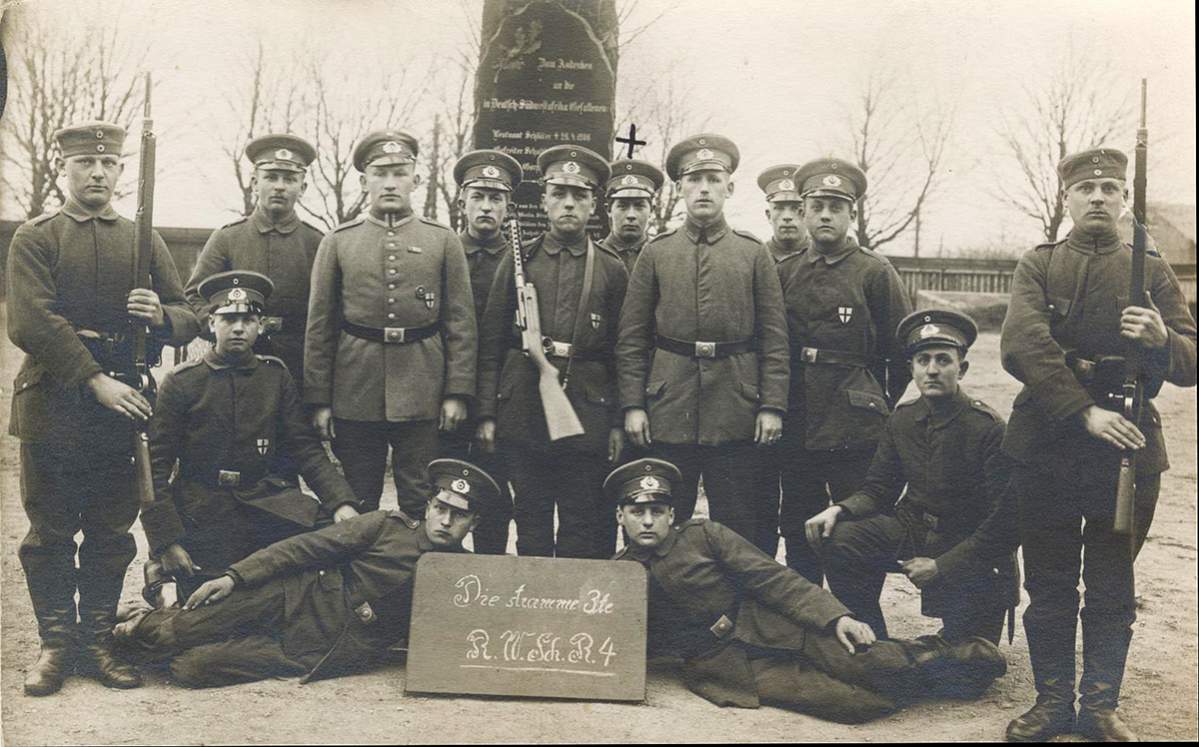
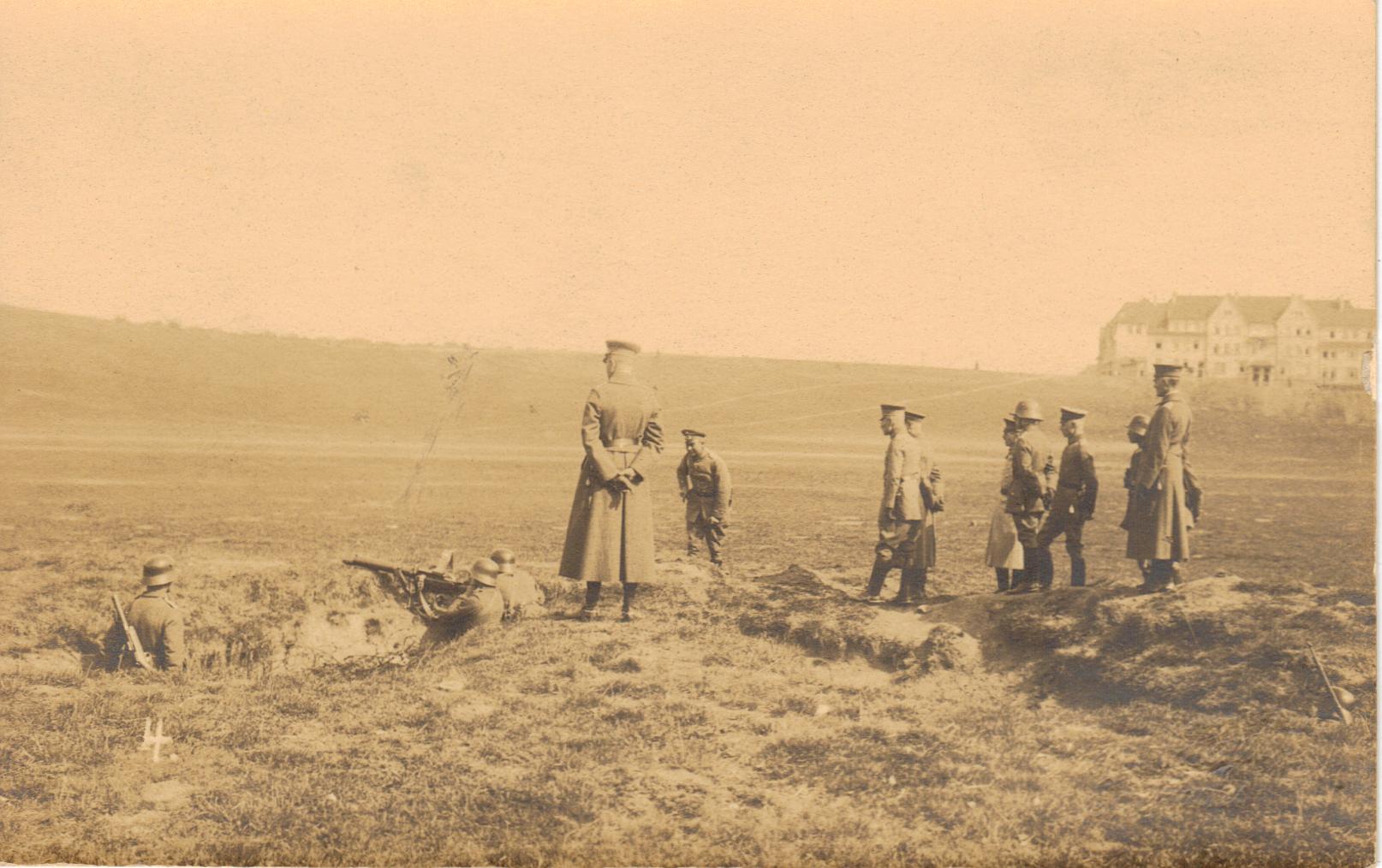
Left: An MP 18,I machine pistol in service with the Reichswehr-Schützen-Regiment Nr. 4, 1919. Right: A Reichswehr training exercise of the early 1920s; the leftmost soldier carries an MP 18,I.
(Image 2: Wooway1 via Flickr)
However, when the Treaty of
Versailles came into full effect on the 2nd January 1920, there
were initially no restrictions placed on machine pistols.
Official orders and bulletins issued by the
Reichswehrministerium during this period confirm the continued
distribution of machine pistols in spite of the rapid
reorganisation that the Army was undergoing
after the Treaty; on the 11th January 1920 the training schools
were instructed to continue instructing troops in the use of the
machine pistol, and on the 22nd January the
Reichswehrministerium affirmed the necessity of issuing such
weapons to engineers, scouts, and line-of-communications
personnel. There was further indication that the issue of
machine pistols to the Reichswehr was under review on the 31st
July, when the Reichswehrministerium gave instructions that "the machine pistols,
anti-aircraft rifles and infantry ammunition that are used [in
these guns] remain with the
troops of the Reichswehr until further instructions are given",
though no restrictions were placed on these guns for the rest of
the year. MP 18,I machine pistols were in fact deployed in
combat by Reichswehr troops against Communist paramilitaries
during the Ruhr Uprising (13th March - 6th April 1920), and
mutinous elements of the Reichswehr were armed with MP 18,I
machine pistols during the abortive Kapp Putsch (13th - 18th
March 1920).
Amendments
to the training guidelines for the MP 18,I were made at this
time, and on the 5th of March 1920 the Reichswehrministerium
ordered the distribution of new manuals for the gun at a rate of
3 copies per Reichswehrgruppenkommando
('Reichswehr Group Command'); 6 per Infanterie-Brigade and
Infanterie-, Jäger-,
and Radfahrer-Kompagnie, and 10 for the Kavallerie-Regiment Nr.
10.
Restrictions
on the use of machine pistols by the Reichswehr were finally
introduced in May 1921, by decree of the Council of Ambassadors
(the Allied peacekeeping governing body) rather than dictated by
the Treaty of Versailles itself. This became a point of
grievance for proponents of German rearmament during this
period, as it was considered to be an overreach of the original
terms of the Treaty. The German nationalist sentiment regarding
this decision was neatly summarised in the 1929 book Zehn Jahre Versailles ('Ten Years of Versailles'):
"The German Reichswehr lagged so
far behind all other military powers in terms of its artillery
armament that it was no longer a force to be reckoned with in
field and trench warfare. Not only that, but the Reichswehr's
equipment, including ammunition and small arms, was also
restricted down to the smallest detail, even though these were
not battle-deciding weapons, about which the Treaty of
Versailles made no specific provisions. For example, Germany
was forced to relinquish its machine pistols and anti-tank
rifles and surrender those in its possession based on a
decision by the Council of Ambassadors on the 25th May 1921."
In
spite of these regulations, special permission was obtained to
retain restricted small arms at the training schools for
instructional purposes and study trials.
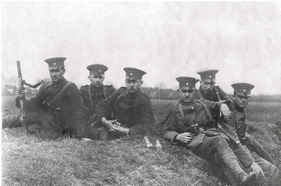
Reichswehr troops armed with MP 18,I machine pistols during the failed Kapp Putsch (13th - 18th March 1920) and the Ruhr Uprising (13th March - 6th April 1920). The MP 18,I would
be withdrawn from Reichswehr service a year later.
(Image 1: Library of Congress)
(Image 2: Bundesarchiv)
In Police service
The
primary government users of the MP 18,I machine pistol in
Germany throughout the 1920s were police organisations. Under
the regulations imposed by the I.M.K.K., Ordnungspolizei (uniformed
police) were permitted to possess machine pistols and distribute
them at their own discretion, provided the rate of issue never
exceeded 1 gun per 20 men. To ensure compliance with these terms,
police service MP 18,I machine pistols were issued under the
oversight of the Inter-Allied Commission of Control and marked
with the property stamp '1920'
(the year the Treaty of Versailles came into effect), denoting
that they had been officially approved for use. Guns that were not
stamped with this mark were ineligable for police issue.
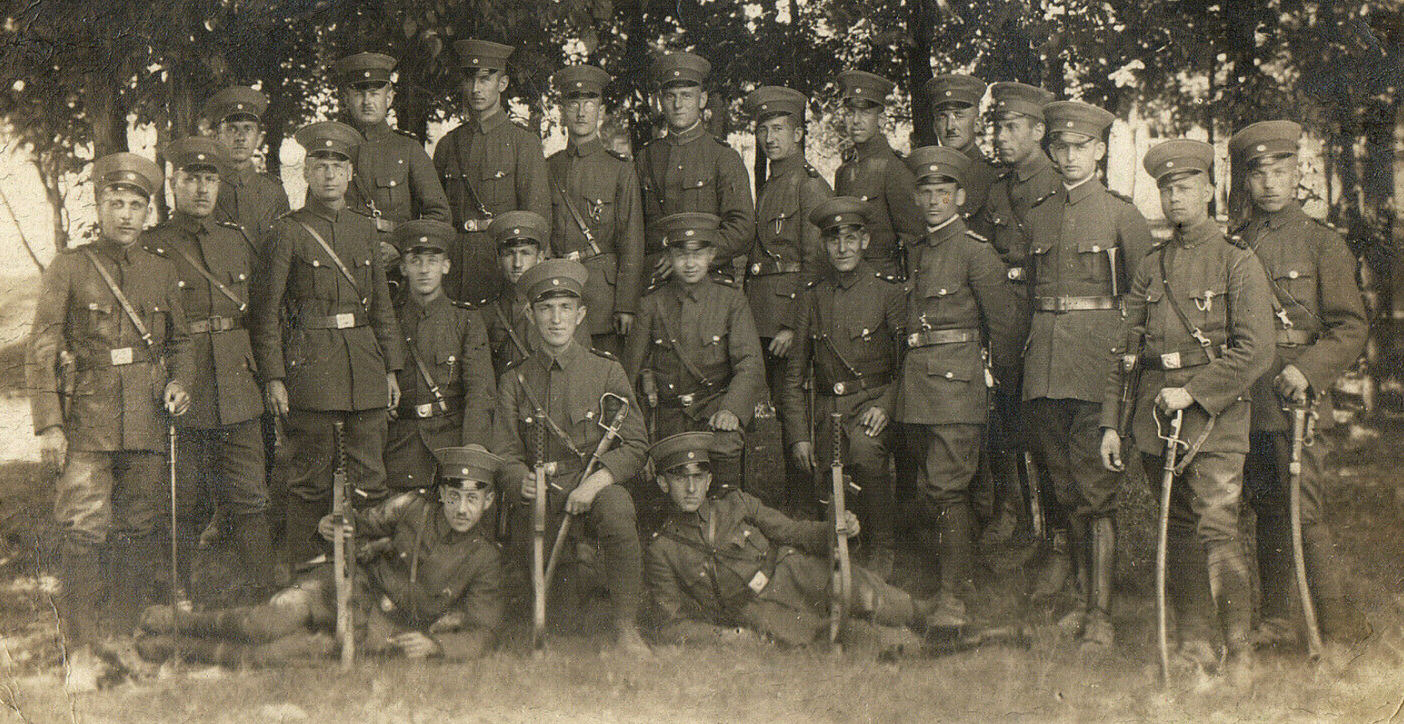
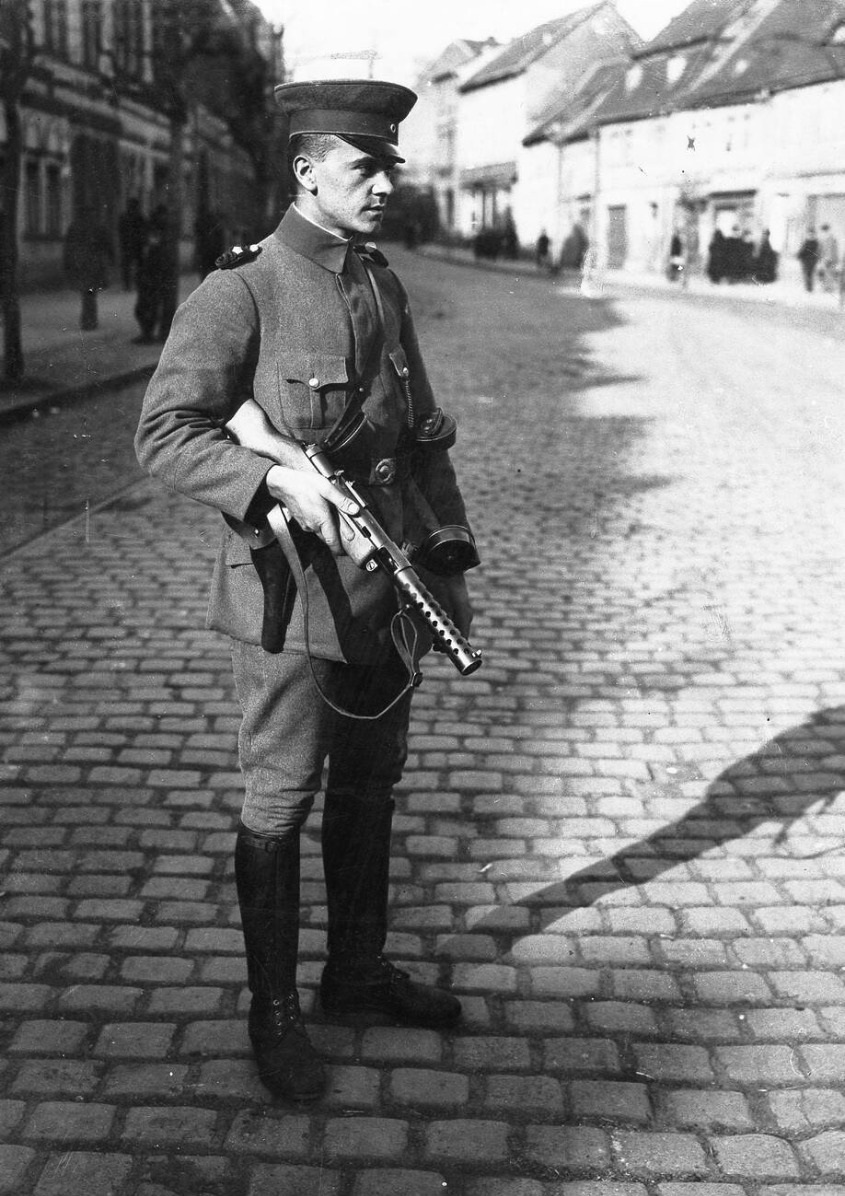
Left: Sicherheitspolizei group armed with three MP 18,I machine pistols, undated. Right: A Sicherheitspolizei officer wielding an MP 18,I with one spare magazine looped around
his belt, Eisleben, March 1921. The Sicherheitspolizei became the primary state user of the MP 18,I following the retraction of machine pistols from Reichswehr service.
(Image 2: Bundesarchiv)
As of 1921, the Berlin police
retained an arsenal of 405 MP 18,I machine pistols, enough to
supply a force of about 8,100 men under the regulations of the
I.M.K.K. One of the main beneficiaries of the police issue of
machine pistols was the Sicherheitspolizei
(SiPo; 'Security Police'), a heavily-armed
federal police force which was deployed to combat riots and
insurgencies.
In 1925, Simson & Co. of
Suhl was awarded an exclusive contract to supply MP 18,I machine
pistols to the police.
In
Freikorps, Ultranationalist, & Communist paramilitary
service
Amidst
the political violence that marked the post-war Weimar Republic,
the MP 18,I proved a popular weapon amongst paramilitary forces.
The Freikorps were among the first to widely use the MP 18,I in
this context. Local Freikorps formations which were organised
during the German Revolutionary period (29th October 1918 - 11th August 1919) equipped themselves with military ordnance
obtained from government depots, including MP 18,I machine
pistols. It is notable that the Freikorps Ritter von Epp, based in Bavaria, was armed
with MP 18,I machine pistols, which were almost certainly used in the suppression of the Bavarian Soviet Republic (6th April - 3rd May 1919).
Photographic evidence from this period also indicates that MP 18,I machine pistols were in use by German paramilitary formations in the Baltics, the Eiserne Division or Baltische Landeswehr. One photograph shows a soldier in a machine gun section wielding an MP 18,I. Another photograph which may also have been taken in the Baltics, depicting an assault formation captioned as 'Stosstrupp Stohr', shows the squad's commanding officer armed with an MP 18,I. This would have been unusual of a wartime formation since the MP 18,I was intended to be assigned to NCOs.
The extent to which MP 18,I machine pistols were used by German paramilitaries in the East is unknown, though the possible use of such weapons by the aforementioned units may indicate that some machine pistols were issued to the 8. Armee, from which the Baltische Landeswehr was derived, either in the final months of the war or in the immediate post-war interregnum period.
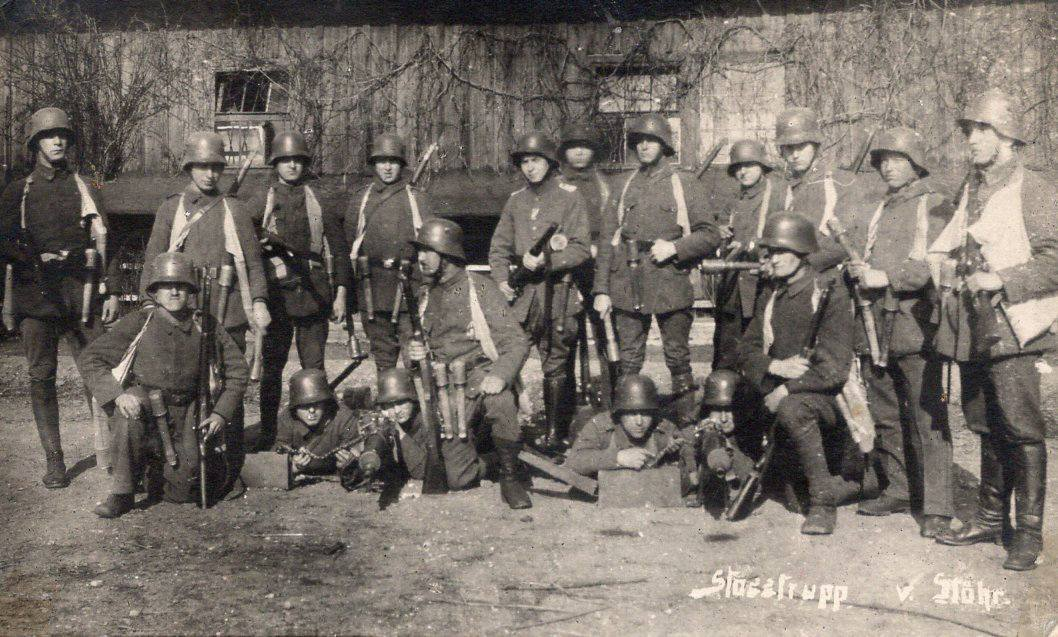
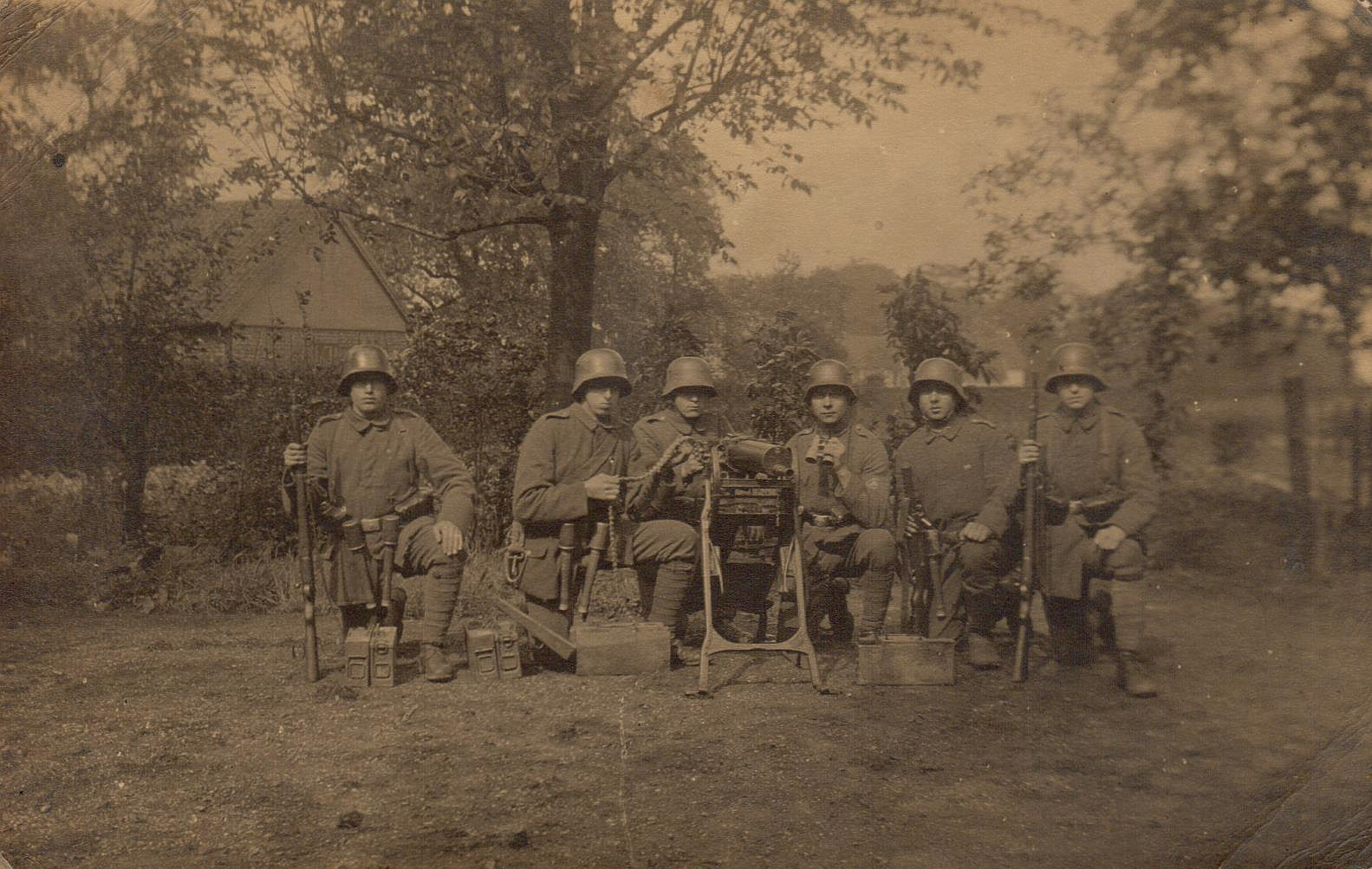
Left: An MP 18,I machine pistol wielded by the officer of an assault formation captioned 'Stosstrupp Stöhr', possibly a post-war Baltic paramilitary; Right: An MP 18,I in use by an MG 08 section; the presence
of a Baltic Cross on the leftmost man's uniform identifies this as a post-war unit. Neither of these are typical of the wartime distribution of the MP 18,I machine pistol.
(Wooway1 via Flickr)
Following
the quelling of the Communist uprisings both domestically and in
the Baltic states, the Weimar government ordered the disbandment
of Freikorps paramilitaries and the surrender of their arsenals.
A count of surrendered arms published in January 1921 gives a
clear picture of how widespread the use of the MP 18,I had been
by Freikorps fighters: some 1,650 machine pistols were
surrendered to the government.
Minor
politically unaffiliated ultranationalist groups made continued
use of the MP 18,I beyond the disbandment of the Freikorps. The
most notorious example of this occured on the 24th June 1922
when the government foreign minister, Walther Rathenau, was
assassinated by members of the far-right terrorist cell
Organisation Consul using an MP 18,I machine pistol. The weapon
was used in a drive-by shooting in which its rapid rate of fire
ensured that the assassins were able to kill Rathenau without
any great regard for accuracy or disciplined shooting. The use
of an MP 18,I in this event received widespread emphasis in the
German press and created an association between machine pistols
and criminals, similar to the way in which the Thompson gun
became infamous for its use by Prohibition-era gangsters in the
United States. For many German nationalists who were sympathetic
to the assassins, however, the use of the MP 18,I in this act
likely only bolstered the weapon's reputation.
Communist
paramilitaries also obtained MP 18,I machine pistols, likely
through the illicit trafficking of guns from military or police
depots. Little can be said definitively on the use of the MP
18,I by Communist militants, however it is known that several
such guns were confiscated by German police from Communist arms
caches as late as the 1930s.
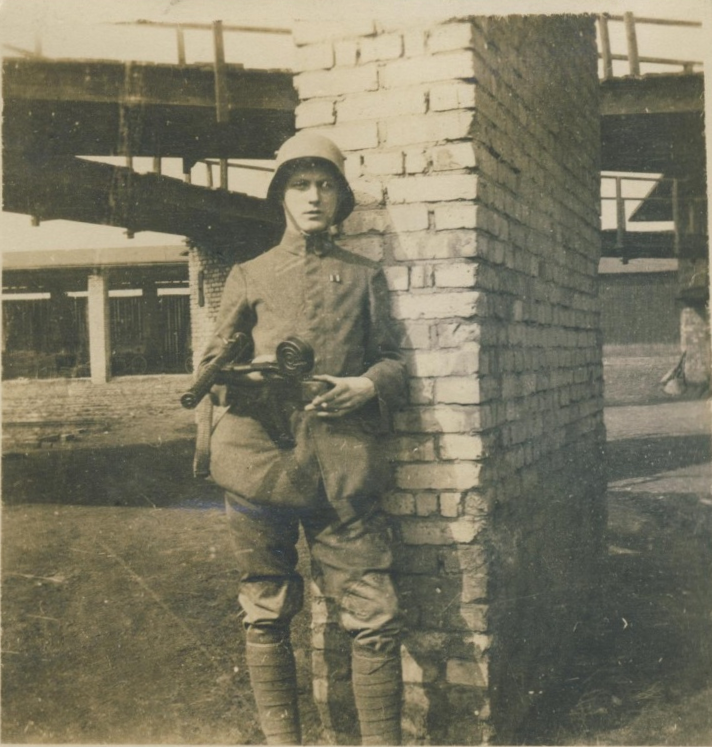

Left: A
soldier of an unidentified unit (possibly Freikorps) wielding an
MP 18,I machine pistol; Right: A volunteer of the Freikorps Ritter
von Epp loading an MP 18,I during a drilling exercise
in Bavaria, May 1919.
Experimental
variants II, III, & IV
Though the initial model MP 18,I was considered acceptable for service by the German Army, Hugo Schmeisser appears to have been unsatisfied with the finished design and made several sequential steps to improve it. Three additional variant models, incorporating these improvements, were conceived during 1918, known as the models MP 18,II, MP 18,III, and MP 18,IV. It is clear that Schmeisser had decided this naming convention from the start, as the aforementioned serial № 2 already bears the 'I' suffix, indicating that the development of a second pattern ('II') had been anticipated from the earliest stages of the MP 18's production. Oberstleutnant Werner Eckhardt, writing in 1936 for the Wehrtechnische Monatshefte journal, indicated that all three of these improved models were proposed to the German Army during the war, either physically or on paper, but that the Army declined to pursue them as they considered the MP 18,I to be satisfactory for their needs.
The details surrounding the MP 18,II are unclear as no
surviving models are known to exist, nor any documentation
describing the design; its existence is only known through
Eckhardt's report. A single model of the MP 18,III survives
within the SIG Museum Collection in Switzerland. Several
alterations to the design are seen in this model. The most
significant is the reconfiguration of the magazine feed to
take straight box magazines at a 90 angle, rather than the
canted TM.08 drum magazine. The box magazine used in the MP
18,III is of a double-stacked design and employs a
double-position feed opening. It is very similar to, but
possibly not interchangeable with, the pattern of magazine
developed by Mauser for their experimental C17 carbine (an
earlier iteration of this magazine was seen on the prototype
C06/08 pistol). It is a possibility that the Preuß.
KM had been impressed by the
Mauser magazines during trial of the C17 carbine in 1917, and
proposed the idea of redesigning the MP 18,I to feed from
these magazines after flaws in the TM.08 were detected in the
last months of the war. This is supported by a post-war
memorandum of 1923, which stated that a new machine pistol in
Reichswehr service should use the Mauser-type box magazine.


and MP 20,IV. In 1923 the Reichswehr officially recommended that all future machine pistol in service should use this type of magazine, including the Dreyse (Rheinmetall) model that was
slated to be a potential successor to the MP 18,I.
Other detail changes seen on the
MP 18,III include the introduction of an adjustable rear
tangent sight in place of the standard flip-up fixed notch
sight of the MP 18,I and the redesign of the bolt handle from
a curved lever to a round knob. The addition of a tangent
sight was rather superfluous, as the sight range up to 1,000
metres was well beyond the effective firing range of the MP
18,I and indeed far in excess of the range that German troops
were trained to operate the MP 18,I at (200 metres). The
impetus for the latter change to the bolt handle is unknown
but it may have been intended to prevent the handle from
snagging on clothing.
No gun marked 'MP 18,IV' is known to exist, though a single
prototype of an experimental machine pistol made at C.G.
Haenel, marked 'MP 20,IV', exists in the collection of the St.
Petersburg Artillery Museum. This weapon is clearly a
development of the MP 18,III and is in almost all aspects
identical to that weapon, except for the addition of a
push-through fire selector switch above the trigger and a
redesigned receiver disassembly catch. It is therefore very
probable that the MP 20,IV is simply a physical prototype of
the concept MP 18,IV, renamed 'MP 20' to denote that it was
built in 1920 rather than in 1918. It is not plausible that
there was a separate series of MP 20 prototypes numbered I,
II, and III preceding this gun.
Of
all these experimental models, only the MP 18,III made it into
production. In 1920, Theodor Bergmann licensed production of
the MP 18,III to the Schweizerische Industrie Gesellschaft (SIG) in Switzerland, under the generic
commercial name 'Bergmann Machine Pistol'. The sole surviving
model of the MP 18,III which exists in the SIG Museum
collection today is very likely a study sample provided to SIG
by Theodor Bergmann as part of this licensing deal. That
Bergmann does not appear to have provided SIG with a study
sample of the proposed MP 18,IV is again evidence to indicate
that no such gun was actually built at the Bergmann factory,
and only came to fruition in 1920 through Haenel's MP 20,IV.
The SIG Bergmann MP 18,III was manufactured throughout the
1920s and 1930s and sold in large quantities for commercial
export to various countries, with its chief customers being
China, Finland, and Japan. Hugo Schmeisser seems to have had
minimal involvement in this venture and, after leaving the
Bergmann Waffenbau Abteilung in 1919, he continued separate
development of the MP 18 at his new employer C.G. Haenel.
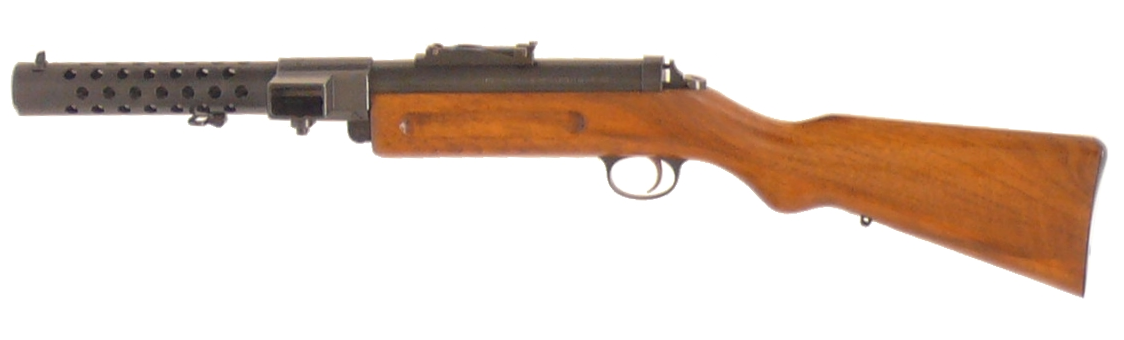
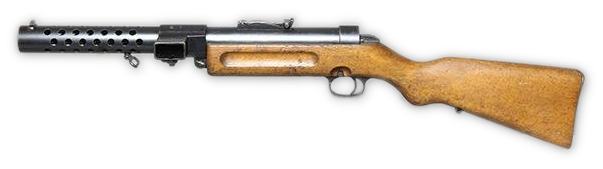
Left:
The experimental model MP 18,III, made at the Bergmann
Waffenbau Abteilung and later sent to SIG in Switzerland where
it was produced under license. The experimental model MP 20,IV
made at C.G. Haenel after the war. This is likely built to the
same specifications as Bergmann's planned MP 18,IV.
(Image 1: SIG Museum)
(Image 2: Military Historical Museum of Artillery, Engineers and
Signal Corps)
The
MP Schmeisser I & II
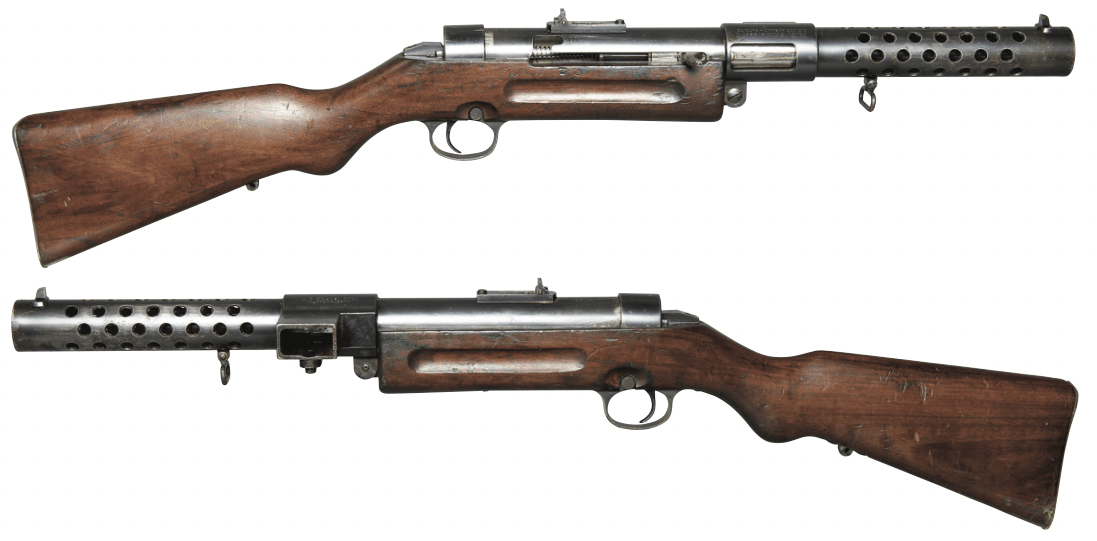

Left: The MP Schmeisser I, a modified version of the MP 20,IV made at C.G. Haenel in the 1920s. It bears a Mauser pattern magazine feed and a button-type fire selector switch located just above the trigger.
Right: Hugo Schmeisser demonstrating the MP Schmeisser I, probably around the mid-1920s.
Trials of the MP Schmeisser I were reportedly undertaken by the Reichswehr at Kummersdorf in 1925, along with a burgeoning rival design by Heinrich Vollmer known as the VMP. These trials yielded no notable action from the Reichswehr, who were constrained from adopting a new machine pistol, and there was only limited doctrinal interest in the role of the machine pistol generally after the First World War.
Subsequently an improved version of the MP Schmeisser appeared in the later 1920s. This was called the 'MP Schmeisser Mod. 28/II', though far more commonly referred to as the 'MP 28,II' and marked as such on the magazine housing. The suffix 'II' is probably intended to denote that it was the second iteration of the MP Schmeisser, after the earlier 'I' prototype; it is unlikely that a weapon marked 'MP 28,I' ever existed. The MP 20,IV fire selector/safety button was retained on this model but many additional improvements were also made, primarily in the magazine feed and recoil spring. This was the first model Schmeisser to abandon both the Trommelmagazin and Mauser pattern feed systems in favour of an entirely new box magazine of Schmeisser's own design. The Schmeisser magazine was double stack but, unlike the Mauser magazine, it had a single-position feed opening. The feed lips were reinforced with a strengthened bracket which was intended to prevent the deformation of the magazine opening (a reported fault of the Mauser magazines). However the result of this change from a double-position to a single-position feed was an inferior magazine that gave a less reliable feed, and would be the cause of many problems not just for the MP 28,II, but also future German machine pistols that imitated the Schmeisser patent magazine, including the MP 38 and MP 40.

magazine feed taking Schmeisser's patented double-stacked, single-position feed magazines. This became the true successor of the MP 18,I in German military service.
(Author's photo via Royal Armouries Collection)
Even as Allied restrictions on German rearmament relaxed in the late 1920s and early 1930s, the MP Schmeisser was not adopted by the Reichswehr and so export sales were Haenel's main source of generating interest in this weapon. However prior to the Nazi seizure of power, Germany was still subject to export restrictions, and therefore Haenel came into an arrangement with two foreign companies, Pieper in Belgium and Veland in the Netherlands. Pieper ostensibly served as the manufacturer of these early model MP Schmeissers, though in reality Pieper merely assembled components made in Germany by C.G. Haenel. These early Pieper-branded guns which were distinguishable by their rounded cocking handles as opposed to the standard curved lever type which was typically used in the Schmeisser and Bergmann guns. Additionally, some of these early guns were 'sanitised', with no markings on the magazine housing except for a serial number, and occasionally they were fitted with a special type of bayonet mount that screwed onto the ventilation holes of the barrel jacket. Later, the marking 'ANCIENS ETABLISSMENTS PIEPER S.A. HERSTAL' was added, in addition to proofing stamps by Woit Nicolas Cominoto.
By 1933, with the Nazis consolidating power and the I.M.K.K. no longer enforcing the Versailles restrictions, the pretense of Belgian manufacture was abandoned, and Haenel was free to openly manufacture the MP 28,II. Export sales of the MP 28,II were made to Brazil, Bolivia, Bulgaria, Finland, Iran, Norway, Portugal, Romania, and various other countries, in varying quantities. The Spanish manufactured an unlicensed copy of this gun known as the 'Avispero' and later, during the Second World War, the British produced a loose copy called the Lanchester, which was reverse-engineered from samples of the MP 28,II obtained through various sources. Although it is sometimes claimed that the MP 28,II was purchased by China and Japan, the Japanese in fact only bought a handful of trial guns and there is no good evidence of its use in China. These claims are simply suppositions based on misidentification of the aforementioned SIG Bergmann MP 18,III machine pistol which was widely used in those countries.

Demonstration of the MP Schmeisser Mod. 28/II by German police, circa 1933. Note the special magazine pouches. A small quantity of MP 28,II submachine
guns were purchased by the police in the 1930s, though these did not fully replace the MP 18,I.
The 'MP 18,Iv' SYSTEM SCHMEISSER

The so-called 'MP 18,Iv', a modified version of the MP 18,I using the 'System Schmeisser' magazine feed and the 'Blocksicherung' safety lock. These guns were converted
from old MP 18,I machine pistols in police inventory. During the Second World War, they were issued in auxiliary roles, including to sailors of the Kriegsmarine.
(Author's photo via Royal Armouries Collection)
The vast majority of MP 18,Ivs were later fitted with a device known as the Blocksicherung, which was a mechanical safety device intended to remedy the problem of accidental discharge when the bolt was in the closed position. This was a switch screwed onto the forward receiver which, when applied, would interrupt the bolt path and block the bolt from reciprocating backward, therefore preventing it from cycling. The Blocksicherung was also fitted to most Erma EMP machine pistols in German police and SS issue, and were less commonly fitted to MP 28s.
Resources used:
- John Walter,
Central Powers Small Arms of World War One (Ramsbury: The
Crowood Press, 1999)
- Martin Helebrant, The Schmeisser Myth: German Submachine Guns Through Two World Wars (Ontario: Collector Grade, 2016)
- Ernst von Wrisberg, Erinnerungen an die kriegsjahre im königlich preussischen kriegsministerium: Wehr und Waffen, 1914 - 1918 (Leipzig: K.F. Koehler, 1922)
- Max Schwarte, Die
Technik im Weltkriege unter Mitwirkung von 45 technischen und
militärischen fachwissenschaftlichen Mitarbeitern (Berlin:
Ernst Siegfried Mittler und Sohn, 1920)
- Heeres-Verordnungsblatt - Zweiter Jahrgang, 1920 (Berlin: Reichswehrministerium Heeresverwaltung, 1921)
- Additional information provided by Bas Martens
This article is part of a series on Submachine Guns of the First World War